
The Qeiyafa Ostracon Again: A Sober Assessment in Light of the New Finds

§ May 14th, 2012 § Filed under Archaeology in the News, Epigraphy § Tagged , , § 10 Comments

By Christopher A. Rollston
Toyozo Nakarai Professor of Old Testament and Semitic Languages, Emmanuel Christian Seminary

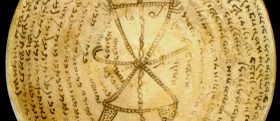
For those working in the field(s) of ancient history, ancient literature, archaeology, or epigraphy there often seems to be a strong desire to associate some new archaeological find, or some recent epigraphic discovery, with some person or event known from literary texts discussing the days of yore.  This basic phenomenon has a long history with regard to literary texts.  For example, within the Hebrew Bible, the book of Lamentations is anonymous, but through the centuries many contended that it was written by the Prophet Jeremiah.  Similarly, the book of Ruth is anonymous, but through the centuries many argued that it was written by Samuel.  Or again, within the Greek New Testament, the book of Hebrews is anonymous, but many attempted to argue that it was written by Paul.  Similarly, the four Canonical Gospels are anonymous, but through the centuries, many have argued that these books were written by known figures of Early Christianity.  Fortunately, critical scholarship has pushed back against such positivistic assumptions and reasserted the obvious: the evidence for these assumptions is not convincing, but specious.

§ Read the rest of this entry…

Archaeology Weekly Roundup!

§ May 11th, 2012 § Filed under Archaeology in the News, ASOR § Tagged § No Comments

BU’s Professor Saturno has announced spectacular new finds from the Maya site of Xultun, including the oldest-known Mayan astronomical tables,  pre-dating other Mayan calendars by centuries. Click here to see high res pictures of one of the murals.

Hebrew University archaeologist finds the first evidence of a cult in Judah at the time of King David. ASOR member, Prof. Yosef Garfinkel, announced the discovery of objects from the archaeological excavations at Khirbet Qeiyafa, that for the first time shed light on how a cult was organized in Judah at the time of King David.

§ Read the rest of this entry…

Secondary Context II announcement

§ May 7th, 2012 § Filed under Annual Meeting § Tagged § No Comments

Site ravaged by looting, SE corner of the enclosing walls of the inner city, Al Resafa, Syria. Image, courtesy of the photographer, Thomas Schutyser

ASOR WORKSHOP
ANNUAL MEETING 2012 (Chicago)
SECONDARY CONTEXT II
Considering Theory and Method for The Study of Objects of No Known Origin

Having examined the complex issues involved in research ethics and the study of unprovenienced material in 2011, we focus on Theory and Method in 2012.

Rather than asking “Should we?” or “Shouldn’t we?” study, present, publish, or exhibit objects of unknown origin, we look forward to considering how best to determine guidelines or suggested practices in an arena where opinions are admittedly complex and often contested.

In 2012, our presenters address the conscientious treatment of unprovenienced artifacts, corpora and collections. New, responsible ways to exhibit and/or publish such works are also considered.

§ Read the rest of this entry…

Archaeology Weekly Roundup!

§ May 4th, 2012 § Filed under Archaeology in the News, ASOR § Tagged § No Comments

A great new tool, ORBIS expresses Roman communication costs in terms of both time and expense. By simulating movement along the principal routes of the Roman road network, the main navigable rivers, and hundreds of sea routes in the Mediterranean, Black Sea and coastal Atlantic, this interactive model reconstructs the duration and financial cost of travel in antiquity.

§ Read the rest of this entry…

Christina Luke on Building Understanding and Countering the Illegal Trade in Antiquities

§ May 3rd, 2012 § Filed under Antiquities Market, Cultural Property and Heritage § Tagged , , § No Comments

One of the highlights of the ASOR Workshop, SECONDARY CONTEXT I, was a contribution by Christina Luke, the noted researcher and scholar of legislation pertaining to the regulation of the movement of unprovenienced artifacts.
§ Read the rest of this entry…

Changing attitudes toward looting. What are your ideas?

§ May 1st, 2012 § Filed under Antiquities Market, ASOR, Cultural Property and Heritage § Tagged , , § 9 Comments

Euphronios Krater, returned to Italy by the Metropolitan Museum of Art

By Dr. Lynn Swartz Dodd

A growing body of literature documents the reality that the ancient, buried landscape of Israel, including the areas known as the West Bank and Gaza, are being inexorably and irretrievably looted. Looting refers to a process by which objects are removed without official permission or archaeological oversight and documentation. [1] Some positive outcomes may devolve to those who participate in such activities (money from selling artifacts, cultivation of buyer/dealer networks, prestige from owning objects that are old and in increasingly short supply).  In every single case, there is a parallel negative result that occurs, which is the loss of context for an ancient object and the loss of association between those certain artifacts and the place they last were laid by an ancient actor. Anyone who denies that this outcome is the reality is, in this author’s mind, uninformed about the consequences of looting. § Read the rest of this entry…

Archaeology Weekly Roundup!

§ April 27th, 2012 § Filed under Archaeology in the News § Tagged § No Comments

The Dead Sea is drying up, check out more pictures here.

§ Read the rest of this entry…

Free JSTOR Access and New NEA!

§ April 26th, 2012 § Filed under Near Eastern Archaeology, Publications § Tagged , , § No Comments

There’s a week left to access the full runs of all of ASOR’s three journals though JSTOR, so if you haven’t signed up, do it now! Click the button in our sidebar or click here to go to JSTOR and get free access to all our journals.

And now the latest issue of NEA is online as well. Sign up or sign in to check out NEA 75.1 before the print copies have even reached their destinations!

§ Read the rest of this entry…

Archaeology Weekly Roundup!

§ April 19th, 2012 § Filed under ASOR § No Comments

Egyptian archaeologists find four Greek and Byzantine-era tombs in old Alexandria’s eastern necropolis, bringing a halt to planned residential project.

Mesolithic artefacts from a lost settlement are coming to light after 6 millennia after currents scoured sand from the seabed just of the coast of Denmark in Horsens Fjord.

§ Read the rest of this entry…

DAVID I. OWEN ON OBJECTS & INTRINSIC VALUE

§ April 13th, 2012 § Filed under ASOR, Cultural Property and Heritage § Tagged § 1 Comment

David I. Owen is the Bernard and Jane Schapiro Professor of Ancient Near Eastern and Judaic Studies in the Department of Near Eastern Studies at Cornell University. Dr. Owen contributed several filmed commentaries to both the CSIG (Coroplastic Studies Interest Group)-sponsored Round Table (2010)  and the SECONDARY CONTEXT I Workshop (2011) at the annual meetings. What follows is an excerpt of his conversation with Rick Hauser on the intrinsic value of unprovenienced artifacts.

§ Read the rest of this entry…

The Research Imperative

§ April 12th, 2012 § Filed under Cultural Property and Heritage § Tagged § No Comments

B. Porten at Institute of Archaeology Hebrew University Jerusalem

Dr. Bezalel Porten, Emeritus Professor at Hebrew University (Jerusalem) has devoted much of his recent research to a large number of Idumean ostraca said to come from Khirbet el-Kôm. The following brief remarks are taken from his commentary at ASOR Workshop SECONDARY CONTEXT I. His comments centered on the imperative need to study such material, even if the original find-spot is lost. Dr. Porten’s stance challenges publication policies of some scholarly journals.

-Rick Hauser, Research Associate, IIMAS The International Institute for Mesopotamian Area Studies

§ Read the rest of this entry…

Archaeology Weekly Roundup!

§ April 12th, 2012 § Filed under Archaeology in the News, ASOR § Tagged § No Comments

Prosecutors in Egypt have indefinitely adjourned hearing the testimony of the former Antiquities Minister Zahi Hawass who is charged with smuggling Egyptian antiquities to the United States and Australia, and of squandering public funds.

The Titanic will fall under UNESCO’s protection and the 2001 Convention on the Protection of Underwater Cultural Heritage once it passes the 100th anniversary of its sinking on 15 April.

§ Read the rest of this entry…

A Class Trip to the Metropolitan Museum of Art

§ April 11th, 2012 § Filed under Antiquities Market § Tagged , § 4 Comments

Rachel Hallote
Purchase College SUNY

Next week I will be taking the students in my “Politics and Archaeology” course to the Metropolitan Museum of Art. We’ll be going as part of our unit on unprovenanced artifacts, collecting, looting and forgeries.

The assignment I give the class is simple: With a partner, choose a section of a gallery of antiquities—Egyptian, Greek, Roman or Mesopotamian. Walk around and write down the pertinent information for every artifact you see there, whether it’s a tiny bead, or a huge piece of architecture, using the museum display cards as your source. For every artifact, make sure you record: 1- the date when the museum acquired it, 2- whether it was uncovered by an archaeological excavation (and which one), 3- whether it is part of a named collection, 4- whether the museum owns it, or whether it is on loan, 5- the period or century to which the artifact dates, and 6- the artifact’s provenance. Then, quantify your results.

§ Read the rest of this entry…

“Jonah” Ossuary Discussed in Print in 1981

§ April 10th, 2012 § Filed under Archaeology and Media, Archaeology in the News § Tagged , § 38 Comments

By Eric M. Meyers and Christopher Rollston, ASOR Blog Guest Editors for March 2012

It has come to the attention of the ASOR Blog that a newspaper article about the so-called “Patio Tomb” in East Talpiyot was published in Hebrew in DAVAR on May 22, 1981 (this tomb has also been called “Talpiyot Tomb B”). The article was entitled, “Haredim Prevent Removal of Ossuaries from Ancient Tomb,” written by the late archaeologist and journalist, Zvi Ilan. Within the article, Ilan notes that religious extremists prevented the Israel Antiquities Authority (IAA) in 1981 from excavating the tomb. Although Amos Kloner (the excavator for the IAA) wished to excavate the tomb, he was not permitted do to so, nor was he even permitted to remove artifacts from the tomb (although he managed to remove a small ossuary belonging to a child). In fact, he was forced to abandon his attempt to write a full scientific report. Kloner’s incomplete report is mentioned briefly in Tabor and Jacobovici’s book.

§ Read the rest of this entry…

The Public Impact

§ April 10th, 2012 § Filed under Archaeology and Politics, Cultural Property and Heritage § Tagged , § 2 Comments

At the Secondary Context I workshop,  Dr. Giorgio Buccellati spoke movingly of his commitment to the people who live in Mozan ( the village for which the tell that covers ancient Urkesh is named). He and his colleagues have collaborated with those who live in Mozan and work the land nearby to create an innovative program that involves both populace and excavators. Small wonder that the site survives intact, a monument to culture, to a people, and to a tradition that endures.
-Rick HAUSER, Research Associate
IIMAS The International Institute for Mesopotamian Area Studies

The Public Impact
Giorgio Buccellati
Co-Director
Mozan/Urkesh Archaeological Project (Tell Mozan, Syria)
March—June 2011

Times of turmoil encourage an intense reflection on the ultimate validity of our field work in foreign lands. Identified as we become with the people, committed as we are to recover their territorial past, engaged as we still remain in the more esoteric dimensions of our research — the question of relevance emerges with urgency. § Read the rest of this entry…

ON SHOPPING FOR ARTIFACTS IN THE HOLY LAND: A RESPONSE TO MORAG M. KERSEL

§ April 9th, 2012 § Filed under Antiquities Market, ASOR § Tagged , § 16 Comments

G.M. Grena
The LMLK Research Website, founder/editor
shop@lmlk.com

Foreword

In comments to Dr. Kersel’s article (Buyer Beware: Shopping for Artifacts in the Holy Land), I expressed disappointment over the undocumented, arbitrary nature of her claims, which amount to an opinion based on hearsay, and contribute little if anything towards scientific knowledge. Herewith, I will present a well-documented firsthand account of my own experience in shopping for artifacts over the past decade in an effort to balance the discussion.

§ Read the rest of this entry…

FORGING HISTORY: MOTIVES, METHODS, AND EXEMPLARS OF FORGED TEXTS [1]

§ April 9th, 2012 § Filed under Antiquities Market, Epigraphy, Inscriptions § Tagged , , § 4 Comments

Christopher A. Rollston, crollston@ecs.edu

Toyozo Nakarai Professor of Old Testament and Semitic Studies, Emmanuel Christian Seminary

I. MOTIVATIONS FOR THE PRODUCTION OF FORGERIES

            Forgeries have been produced for many centuries (Metzger 1997, 125-139; Rollston 2003; 2004; 2005; 2012; Ehrman 2011) and it would not be prudent to believe that the future shall be different from the past in this regard.  After all, there are timeless, discernible motives for the production of forgeries, and these motives can be detected on the basis of actual forgeries from Antiquity, the Middle Ages, the Renaissance, the Enlightenment, and the Modern Period.  (1) Of course, venality is certainly a motivation for the production of forgeries.  During the modern period, for example, non-provenanced inscriptions (i.e., from the antiquities market) routinely sell for four, five, and even six figures.  Some recent non-provenanced inscriptions have been valued at seven figures.  Prior to the modern period, forgeries also garnered substantial amounts of money as well (cf. Metzger 1997, 125-126).  (2) Some forgeries are arguably the result of “sour grapes” (e.g., a student purged in the modern period from an epigraphy program) or professional rivalry, with the forger hoping to “dupe” or “correct” the “offender.”  (3) Similarly, sometimes a forgery can be a prank, a Witz of some sort (e.g., Coleman-Norton’s “Agraphon”).  (4)  Moreover, there is a certain amount of prestige associated with being the person who “collects,” “vets,” or “finds” a significant “ancient epigraph” from the market.  § Read the rest of this entry…

The Secondary Context Workshop: A Report

§ April 6th, 2012 § Filed under Antiquities Market § Tagged , § 2 Comments

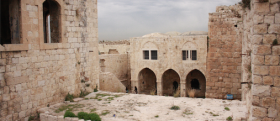
Site ravaged by looting, SE corner of the enclosing walls of the inner city, Al Resafa, Syria. Image, courtesy of the photographer, Thomas Schutyser

Site ravaged by looting, SE corner of the enclosing walls of the inner city, Al Resafa, Syria. Image, courtesy of the photographer, Thomas Schutyser

A Report

In the waning days of November, 2011, colleagues in archaeology and related sciences with special interest in research issues centering on the Ancient Near East gathered in San Francisco for their annual meeting. Over 800 of some 1300 members were in attendance; and of these, fully ten percent attended our workshop! § Read the rest of this entry…

Buyer Beware: Shopping for Artifacts in the Holy Land

§ April 5th, 2012 § Filed under Antiquities Market, ASOR § Tagged § 13 Comments

Morag M. Kersel
DePaul University
mkersel@depaul.edu

Although the recent outcome of the “Trial of the Century” did nothing to settle debate over the authenticity of the inscription on the James Ossuary, this case confirms that artifacts that are purchased on the market are entangled in webs of intrigue. We will never know the exact archaeological provenience (findspot) of this ossuary or the many other artifacts for sale in the licensed shops in Israel. Unsuspecting tourists, collectors, dealers, museums, and educational institutions all take a chance when purchasing artifacts on the Israeli market with no accompanying background information. Buyers should beware.

§ Read the rest of this entry…

Archaeology Weekly Roundup!

§ April 5th, 2012 § Filed under Archaeology in the News § Tagged § No Comments

Syria’s year-long revolt has exposed to looting and destruction the country’s archaeological treasures, including the ancient city of Palmyra and the Greco-Roman ruins of Apamea, experts warned. Most vulnerable are strife-torn areas that have fallen outside the full control of the regime where looters have already targeted museums, excavation sites and monuments.

After studying ancient Mesopotamian, Chinese and Egyptian cultures, middle schoolers at one Pennsylvania middle school got to take part in a mock archaeological dig run by two California University of Pennsylvania professors.

§ Read the rest of this entry…

« Older Entries