Archaeology Weekly Roundup! 5-24-13

An international team of researchers including Colorado State University professors Christopher Fisher and Stephen Leisz have been utilizing LiDAR technology to seek ancient settlements and human constructed landscapes in an area long rumoured to contain the legendary city of Ciudad Blanca the mythical “White City” – in Central America.

Schoolchildren, pensioners and office workers are helping scholars at Oxford University to transcribe 2,000-year-old documents. The Ancient Lives project has enlisted thousands of internet users, who have already helped to transcribe more texts than diligent scholars had managed in the previous 100 years.

 Ancient ivory carvings made by Phoenician artists some 3,000 years ago have long hidden a secret, even while being openly displayed in museums around the world: The sculptures were originally painted with colorful pigments, and some were decorated with gold. Continue reading

The Ancient Near East in Brazil and Argentina From the Origins of Research to the Present

By: Josué Berlesi

Brazil and Argentina are not the first places you think of for ancient Near Eastern studies. But the story of ancient Near Eastern studies in these places is both interesting in its own right and says important things about education and culture in these countries.

There are similarities between the discipline in these two countries but their differences are tremendous and are related to the larger history of academic institutions. Argentina’s academic tradition is far longer and more solid than Brazil’s. The first Brazilian university (Federal University of Rio de Janeiro) was created only in 1920, while the oldest in Argentina, the University of Cordoba, was founded in 1613.

Berlesi_Cordoba-derecho

Former Rectory, University of Cordoba (source: http://en.wikipedia.org/wiki/File:Cordoba-derecho1.JPG)

Unfortunately, there are few sources to investigate the development of ancient Near Eastern studies in these two countries. But this also says something about the important differences between the two. In Brazil there are useful articles about the development and the present situation of the discipline of ancient history, but these are rarely found in Argentina. Why? In my opinion the abundance of sources in Brazil is an attempt to bring visibility to an area that has been given little space in most Brazilian universities. In contrast, ancient history has been more successful in Argentina, where it has been solidly represented since the second half of the twentieth century. The need for acknowledgement is therefore lower. Continue reading

Archaeology Weekly Roundup! 5-17-13

Will Egypt’s illustrious heritage fall into oblivion under the toll of urban and agricultural encroachment? Nevine El-Aref finds that serious problems are facing some of the nation’s famous archaeological sites, while others may be storms in so many teacups.

By the end of the century, the birthplace of America may be underwater.  Jamestown is now threatened by rising sea levels that scientists say could submerge the island and scientists are wondering if there’s a way to save it.

Analysis of DNA from ancient remains on the Greek island of Crete suggests the Minoans were indigenous Europeans, shedding new light on a debate over the provenance of this ancient culture. Continue reading

Ten Years after Iraq: Archaeology, Archaeologists, and U.S. Foreign Relations

KerselLuke_Fig4

Thirty-foot tall bronze sculptures of former Iraqi Saddam Hussein, sit on the grounds of the Republican Palace, in the International Zone (IZ) located in Central Baghdad, Iraq. (DoD photo by Jim Gordon, CIV)

By: Morag M. Kersel and Christina Luke

Ten years ago, in April of 2003, a coalition led by the United States invaded Iraq. This quickly toppled the Ba’athist regime of Saddam Hussein but also resulted in the loss of life, local unrest, displacement, and the ransacking of cultural institutions, archives, libraries, and the national museum in Baghdad. During that eventful month we both worked for the U.S. Department of State in the Cultural Heritage Center– Christina as a cultural property analyst and Morag as a contractor, administering the U.S. Ambassadors Fund for Cultural Preservation.

In our daily work lives at State we knew that we were carrying out foreign policy initiatives under the guise of archaeology, but until April of 2003 and the unfolding events in Iraq we did not realize that all of the programming and initiatives we carried out at State, and much of our previous lives as archaeologists, was in the service of the state, under a paradigm of national bridge building and fence mending. While we do not wish to diminish the myriad devastating effects of war on humanity, as archaeologists we are also concerned with the consequences of war on cultural heritage. Continue reading

Hand in Hand with Politics: The Challenges of Egyptian Studies in Serbia

By: Branislav Anđelković

There is a saying that Balkans, sometimes rightly compared to a “powder keg”, is a place where the East offered a hand to the West but the West refused to shake it. The Balkan Peninsula is a land bridge between Europe and Asia, through which pass major cultural boundaries. The Balkans are a border, and an arena, between two different cultural spheres with contrasting world views, value systems, aesthetics, and artistic tendencies: Rome and Byzantium, the Habsburg Monarchy and the Ottoman Empire, West and East, Modern and Oriental. And we cannot forget that there are deep divisions within the Balkans, particularly between north and south. These divisions have unfortunately manifested themselves as open warfare but have also been expressed in the politics of Yugoslavian Egyptology.

andelkovic_fig1

Figure 1: Scarab excavated in Serbia. Photo courtesy of B. Anđelković.

Archaeological objects from the Near East appeared sporadically in Serbia and can be classified in four chronological and contextual settings. The first – represented by a glazed composition scarab found in a local Iron Age ruler’s grave mound (dated 550-520 B.C.) in Southwestern Serbia – corresponds to prehistory (Figure 1). The second, the era of Roman domination, includes a number of artifacts, chiefly figurines, lamps, and inscribed altars, connected to Egyptian or syncretistic deities, chiefly Isis, Isis-Fortune, Harpocrates, Anubis, Hermes-Thoth, and others. These are mostly of Roman rather than Egyptian manufacture, though during the construction of Roman emperor Galerius’ palace in Eastern Serbia (ca. 300 A.D.) a number of architectural elements including some columns and statuary were made of Aswan red granite and other Egyptian stone (Figure 2). Continue reading

Study of Early Pottery Workshops in the Eastern Mediterranean and the Near East Around 6,000 cal. BC

Ingmar FranzBy: Ingmar Franz, Freiburg University, George A. Barton Fellow

The goal of my project was an in-depth survey of the literature focusing on early pottery production in the Neolithic and Early Chalcolithic periods in the Eastern Mediterranean Basin and the Near East. The well-organized Albright library provided the opportunity for me to find almost every source I needed. Discussions with the fellows at the institute were also fruitful and contributed to the success of my project. Continue reading

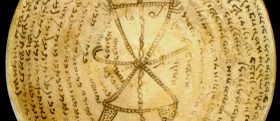
Typology and Semantics of Cryptograms and Acrolexa in the Orthodox East in the Byzantine and Post-Byzantine Period

Moutafov- EmmanuelBy: Emmanuel Moutafov, Bulgarian Academy of Sciences, Andrew W. Mellon Fellow 

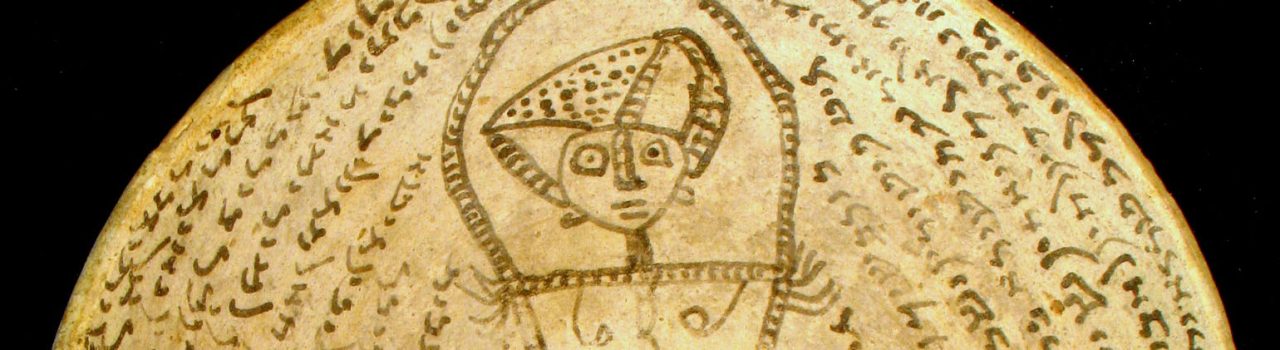
For some scholars, the letter abbreviations with encoded meaning on cryptograms and acrolexa are the creation of a monachus ludnes (a monk having fun), who has been instructed to hide his identity or his personal message in an acrostic or in visual poetry, writes his signature through cryptographs, laughs at monastery moralizing anecdotes and does not want his identity to be revealed in the vanity of mundane life. This monk is perhaps of the greatest schema, due to which the so-called cryptograms will be written on his hood, in order to protect him from evil demons, impious thoughts, misfortunes, and encroachments. Continue reading

Archaeology after the Arab Spring

By: Jesse Casana

The transformative political events in the Middle East over the past two years have had, among many other unexpected outcomes, profound effects on the direction of research in Near Eastern archaeology.  War and civil unrest act as both a carrot and a stick, forcing the cessation of fieldwork in some areas, while promoting new investigations in places that might otherwise have gone unexplored. The geopolitics of the post-Arab Spring world are changing where we are able work, and by consequence they will shape the research questions we investigate, as well as the regions where future generations of scholars will likely specialize.  But the present moment of realignment is far from unique—our discipline has been shaped from the beginning by the tumultuous political history of the Middle East.

In the spring of 1920, James Henry Breasted and a group of scholars from the University of Chicago’s newly founded Oriental Institute embarked on a survey of major archaeological sites in Mesopotamia and Syria[1]. It was Breasted’s hope that the return of political stability under British rule after the end of World War I would facilitate renewed investigations in Mesopotamia. Having traveled by steamer from Egypt, via Bombay, to Basra in southern Iraq, the team began making their way up the Euphrates and Tigris rivers, visiting many of the most prominent sites in the region, including Uruk, Babylon, and Nineveh.

Casana_Fig1_Breasted_Dura

Oriental Institute expedition team members pose with British officers at the west gate of Dura Europos, May 1920. (Image reproduced courtesy of the Oriental Institute Museum’s Photographic Archives http://oi.uchicago.edu/museum/collections/pa/).

Continue reading

A Seminar on The History and Material Culture of Ottoman Palestine at the Kenyon Institute, Jerusalem

Sinibaldi_2

Fig 1: The seminar poster (graphics by Qais Tweissi)

By: Micaela Sinibaldi

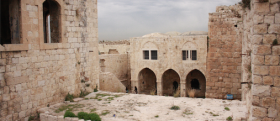
On the 9th and 10th of February 2013 I had the great pleasure to organise a seminar entitled: The History and Material Culture of Ottoman Palestine at the Kenyon Institute in Jerusalem. The seminar consisted of a day of papers and a roundtable discussion at the Kenyon and a day of tours of the Old City led by some of the seminar scholars.

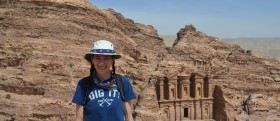
As an archaeologist who works on the Islamic period, I know from my fieldwork and research, which has been especially focused on Petra (Jordan), that it is particularly the later periods which are still largely unexplored by archaeology, particularly the Ottoman period. During my recent work for Brown University, for example, as a co-director of excavations at Islamic Bayda (Petra region), a village whose occupation spans the whole Islamic period, it appeared from my preliminary research that the latest and most extensive phase is Ottoman; however, almost no material is currently available in the region for providing the excavation results with some archaeological parallels. One of the reasons for a very recent interest in the archaeology of the Ottoman period is that, partly because of the wealth of both documentary and monumental architectural sources available, the study of material culture has naturally focused on buildings such as the impressive ones preserved in Jerusalem in the al-Haram al-Sharif and in other areas of the Old City of Jerusalem, rather than on rural sites or on the use of archaeology to help solve chronological questions. Continue reading

Ecclesia Diaboli: The Demonization of the Gentile Religion in Jewish and Christian Thought

By: Aleksander Michalak, Independent Researcher, Poland, Andrew W. Mellon Fellow

My preliminary examination of several Second Temple texts, 1 Enoch, the Book of Jubilees, Joseph and Aseneth, Testament of Job, the First Epistle to the Corinthians, and the Testaments of the Twelve Patriarchs indicates that there is already at this time a connection between demons and the cult of foreign gods, although they are not always explicitly identified with one another. Sometimes the demonic spirits are said only to lead people astray, that is, to lead people toward Gentile worship and toward idolatry, whereas in other cases it is the demonic spirits who are the objects of worship, or the pagan gods themselves. The inanimate material of the idolatrous objects is frequently juxtaposed with the demonic power that is hidden behind them. The association of the Gentiles with the demonic realm in Jubilees is understood to be the result of the subordination of all foreign nations to the rule of spirits. Continue reading

Ancient Tsunamis and their Modern Significance

Ōtsuchi, Iwate, Japan (March 18, 2011). An aerial view of damage to Ōtsuchi, Japan, a week after a 9.0 magnitude earthquake and subsequent tsunami devastated the area. (U.S. Navy photo by Mass Communication Specialist 3rd Class Dylan McCord/Released)

An aerial view of damage to Ōtsuchi, Japan, a week after a 9.0 magnitude earthquake and subsequent tsunami devastated the area.

By: Beverly Goodman

On March 11, 2011, the word “tsunami” went from being an esoteric term to a household word. The world’s television screens were filled with images of destruction and carnage when massive waves generated by an offshore earthquake devastated large portions of northeastern Japan. Waves reaching as high as 40 meters resulted in more than 19,000 people either killed or missing, almost one million damaged or destroyed buildings, and $230 billion in damages. To make matters worse, the Fukushima Nuclear Power Plant was severely damaged, causing a meltdown and explosions that released radioactive contamination into the air and water. According to Forbes, more than 315,000 people remain displaced today.

Just two years after this catastrophe, we are still asking whether any of the devastation could have been prevented. Should houses have been built differently? Should nuclear plants have been sited differently? How safe is it to live near any coast? In the aftermath of Hurricane Sandy in October 2012, such questions are even more pressing for Americans living on the east coast. While archaeology cannot answer all of these questions, it can contribute to our understanding of tsunamis. In turn, the geological study of tsunamis helps us understand important archaeological phenomena in the eastern Mediterranean. Continue reading

ASOR and Archaeological Ethics

By: Lynn Swartz Dodd

“There is a tendency at every important but difficult crossroad to pretend that it’s not really there.”
Bill McKibben

What should American Schools of Oriental Research (ASOR) members do if new Dead Sea Scrolls are found? What if our country’s military actions increase uncontrolled looting of ancient sites? Or if war creates a situation where people and ancient things exist under occupation? How should we deal with the remains of human beings we encounter in burials? How should ASOR members and others support international laws dealing with antiquities?

These are the questions that are driving the development of a new, comprehensive ethics policy for ASOR. This moment has arrived as a result of a decades-long process. ASOR is an organization with an impressive history and a promising future, founded in response to the shared interests, vision, and ideals of professional archaeologists, historians, epigraphers, and others. Continue reading

Using Inscriptions from the Antiquities Market: Polarized Positions and Pragmatic Proposals

By: Christopher A. Rollston

Archaeological sites in the Middle East have been ransacked, pillaged, and plundered for many decades. The motivations of the actual pillaging are normally economic: the pursuit of marketable artifacts. That is, the pillagers wish to find objects that can be sold to collectors. Of course, the motivations of the collectors who purchase these pillaged antiquities range from the desire to possess a piece of ancient history to having putative proof for a cherished belief. Among the artifacts most prized by collectors are ancient inscriptions.

Think briefly about scientific archaeological excavations. Complete pots and potsherds are carefully collected, catalogued, documented, and analyzed, while broken pots are often restored. Organic materials are meticulously bagged and tagged and sent to be carbon dated. Animal bones and seeds are studied to learn about animal husbandry, agriculture, and ancient diets. Grinding stones, needles, and pins are photographed and studied carefully to shed light on aspects of daily life. Metal objects are sent to laboratories for scientific analyses. Stone tools such as arrowheads are sent to specialists for analysis. And inscriptions are sent to epigraphers to be read and analyzed. The result is that knowledge is gained about ancient languages and dialects, and about ancient social structures, and religious practices and ideas. The final result is that scientific excavations yield an enormous amount of information about the ebb and flow of ancient lives. Continue reading

The Dilemma of Denial: Scholarly Publication Policies and the Illusion of Power

By: Jonathan Rosenbaum
President Emeritus, Gratz College

For generations, academic journals have been deemed the appropriate venue for the initial publication of ancient inscriptions and artifacts. Nevertheless, last fall, the New York Times became the source of an editio princeps when it announced the discovery of a “faded papyrus fragment” that seemed to be “first known statement from antiquity that refers to Jesus speaking of [his] wife.” The Times reporter had not gained access to the fragment through a dogged effort of investigative journalism or a lucky find on the black market. Rather, Karen L. King, a prolific scholar of early Christianity at the Harvard Divinity School (HDS), had shared the discovery in an interview with the Times, the Boston Globe, and Harvard Magazine. Prof. King provocatively described the fragment as the “Gospel of Jesus’s Wife.”

Popular media immediately presented a panoply of opinions by respected papyrologists, Coptic linguists, Christian theologians, and laypeople. The Vatican weighed in with both an editorial and an article in L’Osservatore Romano, the former declaring the papyrus a fake and the latter by Coptic scholar, Alberto Camplani, expressing a more guarded opinion based upon the lack of provenance. Continue reading

Archaeology Weekly Roundup! 3-29-13

news-climbing-pyramidAn Internet sensation was touched off this week by Russian photographer Vadim Makhorov and a group of his friends — the group ignored regulations prohibiting the public from climbing on the Pyramids at Giza, Egypt, and came away with spectacular photos.

Bones which some believe could be those of Alfred the Great have been exhumed from an unmarked grave in Winchester to protect them from the enthusiasm of seekers for lost kings inflamed by reports of the rediscovery of the remains of Richard III in Leicester.

Archaeologists in Germany have done experiments on freshwater fish and found that they return C-14 dates hundreds to thousands of years older than the fish, leading to many possible problems in archaeological dating. Continue reading

More than Just Airfare: ASOR’s Good Investment

I am helping clean what seemed a possible differentiation in the color of a plastered mud-brick wall.

By: Mehrnoush Soroush, 2012 Heritage Fellow

In the summer of 2012, I received an ASOR fellowship to join a field project in central Turkey, in the region of Cappadocia. Elsewhere, I described my immense happiness about receiving the fellowship and the invaluable experiences I gained in the field. Here, I would like to write about the significance of the ASOR summer fellowship for my professional career and the reasons I hope ASOR can sustain its support of students in the future through the generous donations of its supporters.

Like everybody else, I guess, I spent the fellowship to pay for my flight and ground transportation. As a general rule, the majority of field projects in the Near East provide basic accommodation and food, when you get there. But, finding financial support to pay for your flight is a big challenge for students. Field directors cannot spend the limited resources they have paying for inexperienced beginners. Several other available funding resources are given only to those who are advanced in their research and can develop a coherent research plan of their own. I applied for the ASOR summer fellowship because it supports beginners like me, with limited options, and enables them to take their first steps into the field. Continue reading

The Relationship of Egypt and its Vassals as Reflected in the Amarna Tablets

Zhihui_YuanBy: Yuan Zhihui, Tianjin Normal University, China, Noble Group Fellow

During my four-and-a-half month fellowship at the Albright, my research project focused on “The Relationship of Egypt and its Vassals as Reflected in the Amarna Tablets.” The aim of the project was to reveal the diplomatic system between Egypt and its vassal states in Canaan. My study draws upon the Amarna Letters, the most important document of the Late Bronze Age, as well as archaeological material from the Near East in order to explore the political and economic relationship between Egypt and these states in Canaan during this period. My research concentrated on  the political, economic and ideological relations between Egypt and its vassal states in Canaan; and two models were employed — the core-periphery approach and the prestige-power theory. Continue reading

A Lasting Impact on My Head and Heart

Heather excavating a hippo jar

By: Heather Pillette, Asbury Seminary, 2012 Heritage Fellow

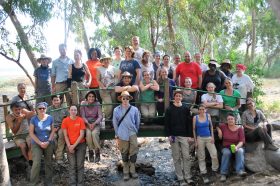
It was a huge honor and great blessing to be one of the recipients of the Heritage Fellowship last year.  I journeyed to the beautiful northern Beth-Shean Valley of Israel to participate in the final dig of a beloved tel: Tel Rehov.  It was an incredible journey and experience, one which would not have been possible without the Heritage Fellowship.

Tel Rehov was my first on-site experience in the field of archeology, and as a result I know it will not be my last!  Rehov has yielded great finds in its seasons of excavation: pottery vessels, seals, inscriptions, figurines and cult stands, the famous apiary, and Carbon 14 data from burnt grain.  This site has significantly contributed to many ongoing conversations and debates.  Finds like these, and experiences like mine, would not be possible without scholarships such as the Heritage Fellowship. Continue reading

Wil Gafney: History Channel’s Satan and President Obama

By: Wil Gafney, Associate Professor of Hebrew and Old Testament at The Lutheran Theological Seminary at Philadelphia.

This entry is reblogged from Dr. Wil Gafney’s blog. You can find the original entry here and Dr. Gafney’s other posts on The Bible series here.


Many viewers of the History Channel’s Bible mini-series saw and see a resemblance between the character of Satan and President Barack Obama. Comparison photos such as the one above are circulating on Facebook, Twitter and other social media platforms. The History Channel denies any resemblance and any attempt to pattern the character after the President.

Whether one sees a resemblance or not, the History Channel has produced a biblical epic with virtually no actors from contemporary corollaries of biblical lands, so the North African (Moroccan) actor Mohamen Mehdi Ouzaani is highly visible as Satan in a production where the Israelites are portrayed by white actors. I have previously addressed the use of race in the series here and here and here. The History Channel is responsible for what it broadcasts just as the producers, Mark Burnett and Roma Downey, and their casting agents are responsible for the product they produce. Continue reading

Mark Goodacre: The Bible Series — Drama and Historical Context

By: Mark Goodacre, Associate Professor of Religion at Duke University

This entry is reblogged from NT Blog. You can find the original entry here and Dr. Goodacre’s other posts on The Bible series here.


March 21, 2013

While I realize that the only thing people seem to want to talk about at the moment in connection with The Bible Series is the alleged resemblance between a still of Mohamen Mehdi Ouazanni and President Obama, I will risk talking about several other features of the most recent installment of the drama, which was broadcast in Sunday evening on History Channel.  Here is a recap of the episode (courtesy of the History Channel website):

One of the aspects that I appreciate in the New Testament episodes of The Bible series is the attention paid to historical context.  One of the challenges for film-makers on this kind of project is to provide some explanation of the historical context without weighing the narrative down with turgid exposition. I talked about this a little in relation to BBC’s The Passion in 2008 in a piece that also found its way onto the DVD, “The Passion” and Its Historical Context. Continue reading