
<?xml version="1.0" encoding="UTF-8"?>
<rss version="2.0"
	xmlns:content="http://purl.org/rss/1.0/modules/content/"
	xmlns:wfw="http://wellformedweb.org/CommentAPI/"
	xmlns:dc="http://purl.org/dc/elements/1.1/"
	xmlns:atom="http://www.w3.org/2005/Atom"
	xmlns:sy="http://purl.org/rss/1.0/modules/syndication/"
	xmlns:slash="http://purl.org/rss/1.0/modules/slash/"
	>

<channel>
	<title>The ASOR Blog</title>
	<atom:link href="http://asorblog.org/?feed=rss2" rel="self" type="application/rss+xml" />
	<link>http://asorblog.org</link>
	<description>The American Schools of Oriental Research</description>
	<lastBuildDate>Sun, 29 Aug 2010 00:57:53 +0000</lastBuildDate>
	<language>en</language>
	<sy:updatePeriod>hourly</sy:updatePeriod>
	<sy:updateFrequency>1</sy:updateFrequency>
	<generator>http://wordpress.org/?v=3.0.1</generator>
		<item>
		<title>FEATURED POST by Christopher Rollston: The Probable Inventors of the First Alphabet</title>
		<link>http://asorblog.org/?p=427</link>
		<comments>http://asorblog.org/?p=427#comments</comments>
		<pubDate>Sat, 28 Aug 2010 20:12:09 +0000</pubDate>
		<dc:creator>XKV8R</dc:creator>
				<category><![CDATA[ASOR]]></category>
		<category><![CDATA[Epigraphy]]></category>
		<category><![CDATA[Inscriptions]]></category>
		<category><![CDATA[alphabet]]></category>
		<category><![CDATA[Christopher Rollston]]></category>
		<category><![CDATA[Hebrew]]></category>
		<category><![CDATA[inventors]]></category>
		<category><![CDATA[Serabit el-Khadem]]></category>
		<category><![CDATA[Wadi el-Hol]]></category>

		<guid isPermaLink="false">http://asorblog.org/?p=427</guid>
		<description><![CDATA[The Probable Inventors of the First Alphabet: Semites Functioning as rather High Status Personnel in a Component of the Egyptian Apparatus Christopher Rollston Introduction: For some time, there has been discussion about the social status of those that developed (“invented”) Alphabetic Writing (i.e., elites or non-elites). Therefore, the nuanced discussion between O. Goldwasser (2010 and [...]]]></description>
			<content:encoded><![CDATA[<p style="text-align: center;"><strong>The Probable Inventors of the First Alphabet:<br />
Semites Functioning as rather High Status Personnel in a Component of the Egyptian Apparatus</strong></p>
<p style="text-align: center;"><strong>Christopher Rollston</strong></p>
<p><strong>Introduction:</strong></p>
<p>For some time, there has been discussion about the social status of those that developed  (“invented”) Alphabetic Writing (i.e., elites or non-elites).  Therefore, the nuanced discussion between O. Goldwasser (2010 and BAS web site) and A. Rainey (BAS web site) is the continuation of an old (and important) debate.  Rainey contends that the inventors of the alphabet were sophisticated Northwest Semites that knew the Egyptian writing system.  Goldwasser argues that the “inventors of the alphabet could not read Egyptian, neither Hieroglyphic nor Hieratic.”</p>
<p>As an <em>Ausgangspunkt</em> for these comments of mine, and to facilitate understanding for those not familiar with the data, I should like to reiterate certain factors that have formed the basic contours of the entire discussion for some time: (1) Non-Alphabetic Writing (i.e., Mesopotamian Cuneiform and Egyptian) is first attested for the terminal chronological horizons of the fourth millennium BCE.  (2) The alphabet was invented once and this arguably occurred during the early second millennium BCE.  All alphabets derive, in some fashion, from this original alphabet.  (3) The script of the Early Alphabetic inscriptions is modeled on (certain aspects of) the Egyptian script, as Egyptologists have noted for some time (e.g., from Gardiner to Darnell).  (4) The language of the Early Alphabetic inscriptions is Northwest Semitic, *not* Egyptian (e.g., ba‘lat).</p>
<p><strong><span id="more-427"></span>I.	Some Salient Moments in the Early History of the Early Alphabet:</strong></p>
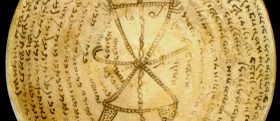
<div id="attachment_431" class="wp-caption alignright" style="width: 310px"><a href="http://asorblog.org/wp-content/uploads/2010/08/Serabit_blog.jpg"><img class="size-medium wp-image-431" title="Serabit Inscription" src="http://asorblog.org/wp-content/uploads/2010/08/Serabit_blog-300x195.jpg" alt="Serabit Inscription" width="300" height="195" /></a><p class="wp-caption-text">Serabit Inscription</p></div>
<p>Research on the Early Alphabet began in earnest during the first two decades of the 20th century.  Sir Flinders Petrie had discovered, in a temple in Serabit el-Khadem (in the Sinai), various Hieroglyphic inscriptions.  However, he also discovered some inscriptions that he considered enigmatic.  He initially referred to these inscriptions as a “local barbarism” (Gardiner 1906, 129-32).  However, Gardiner soon began to analyze this corpus of inscriptions and he became convinced that the script was alphabetic, not some “local barbarism.”  He rapidly made major strides forward in the decipherment of these inscriptions (often referred to as “Proto-Sinaitic”), based on his assumption that “the acrophonic principle” was operative.  Moreover, he also argued that the intellectual soil that facilitated the invention was (certain aspects of) the ancient Egyptian writing system (Gardiner 1916, 1-16), including various Egyptian signs that represented single consonants.  In addition, he became convinced that although these Early Alphabetic inscriptions “are not in Egyptian Hieroglyphic…many of the signs are obviously borrowed from that source” (Gardiner 1916, 14).  Ultimately, based on the date of some of the Hieroglyphic inscriptions in the region of Serabit el-Khadem as well as the morphological similarities between these Early Alphabetic signs and certain Hieroglyphic signs, Gardiner stated that he believed that it was tenable to assign the alphabetic inscriptions to the latter portion of the Egyptian Twelfth Dynasty (i.e., early eighteenth century BCE.  I provide more details in Rollston 2010).  Several decades later, W.F. Albright made some significant progress regarding the history of the Early Alphabet, building on Gardiner’s seminal analyses (Albright 1966).</p>
<div id="attachment_433" class="wp-caption alignright" style="width: 310px"><a href="http://asorblog.org/wp-content/uploads/2010/08/Wadi_el-Hol_Blog.jpg"><img class="size-medium wp-image-433" title="el-Hol Inscription" src="http://asorblog.org/wp-content/uploads/2010/08/Wadi_el-Hol_Blog-300x179.jpg" alt="el-Hol Inscription" width="300" height="179" /></a><p class="wp-caption-text">el-Hol Inscription</p></div>
<p>Through the years, F. M. Cross has also made fundamental contributions to the discussion of the history of the Early Alphabet (see Cross’s collected writings, Cross 2003).  Furthermore, P. K. McCarter’s contributions have been particularly important (e.g., 1975, 1996) as well.  Moreover, both B. Sass (1988) and G. Hamilton (2006; this publication by Hamilton was based on his Harvard dissertation, 1985) have contributed to the discussion.  More recently, two alphabetic inscriptions discovered at Wadi el-Hol (Egypt) were published (J. Darnell, F. W. Dobbs-Allsopp, M. Lundberg, P. K. McCarter, B. Zuckerman 2005) and it has been argued that these can be dated to the same basic chronological horizon as the Early Alphabetic texts from Serabit el-Khadem (although perhaps from a later component of that horizon).  Significantly, J. Darnell (the Egyptologist that was part of the team working on the Wadi el-Hol Inscriptions) has argued that the Early Alphabetic inscriptions from Wadi el-Hol were modeled on Egyptian signs (i.e., his assessment was analogous to Gardiner’s analysis of the Serabit el-Hadem Inscriptions).  Note the following citation in this regard: “What is most striking about the alphabetic texts from the Wadi el-Hol is how so many of the signs appear to reflect features and peculiarities best known from the paleographic, orthographic, and lapidary hieratic traditions of the early Middle Kingdom” (Darnell, et al., 2005, 86).  Also of substantial import in this connection is the content of some of the Hieratic inscriptions discovered in Wadi el-Hol, inscriptions found near the Early Alphabetic inscriptions.  Here is Darnell’s translation of the first four lines of one of these inscriptions: “The General of the Asiatics, Bebi; his daughter Maatherankheni; the Royal Messenger Bebi; The Express Courier Hornebkhasutemsaf” (Darnell, et al., 2005, 88, 102-103).  Of course, the term “Asisatic” in Egyptian is a term used in Egyptian for Semites (especially those from the Levant).  Darnell believes that the writers of the Early Alphabetic inscriptions of Wadi el-Hol were “not slaves,” but “desert experts” who learned Egyptian from “military scribes” (Darnell, et al., 2005, 90).  Note that within a second Egyptian inscription from Wadi el-Hol are references to various officials, including a reference to “The Scribe of the storehouse of the mayor, Sawepwaut” (Darnell, et al., 104).</p>
<p>NOTE: The inscriptions from Wadi el-Hol and Serabit el-Khadem are pictographic in nature and employ a principle often referred to as the acrophonic principle.  So, for example, one of the letters attested has the appearance of a human head.  The word for a human head in Semitic is <em>r ’å</em>.  This pictographic letter stood for the phoneme “r.”  That is, because the first sound of the word for head (<em>r ’å</em>) is “r,” a pictographic depiction of a head was intended to signify the “r” sound.  Similarly, the word for water in Semitic is <em>mym</em>.  Therefore, this pictographic letter (that has, in some respects, the appearance of flowing water) stood for the phoneme “m.”  That is, because the first sound of the word for water (<em>mym</em>) is “m,” a graphic depiction of water was intended to signify the “m” sound.</p>
<p>It should be emphasized strongly here that Early Alphabetic inscriptions are attested not only in Egypt, but also in Palestine (but from later periods).  For example, an inscribed potsherd from Gezer dating to the Middle Bronze Age II (ca. 1800-1630 BCE) contains three early alphabetic letters.  The Lachish Ewer is written in the Early Alphabetic script and dates to some time around the thirteenth  century BCE.  (Regarding the transition from Early Alphabetic to Phoenician, see Naveh 1987; Cross 2003; McCarter 1975, Rollston 2008a, 2008b; 2010).</p>
<p><strong>II.	Literacy in the Ancient Near East and Mediterranean</strong></p>
<p>For the ancient Near Eastern cultural centers of Mesopotamia and Egypt, literacy rates are estimated to be low and confined to elites (e.g., scribes, government officials, priests).  To be precise, for Egypt, literacy rates are often estimated to be at ca. one-percent or lower, and confined to elites (see Baines and Eyre,1983, 65-96; note that even at Deir el-Medina it is elites that are writing).  For Mesopotamia, Larsen believes that one-percent is also a reasonable figure (see Larsen, 1989, 121-148, esp. 134).  There is a fair amount of data from Mesopotamia and Egypt about the nature of scribal education (schools, school texts, buildings, etc.) and I discuss these data at some length in a volume on writing and literacy in the world of ancient Israel (Rollston 2010).</p>
<p>Some have suggested that with the invention of the alphabet, literacy rates rapidly became quite high, with both elites and non-elites writing and reading (note: these two skills are related, but quite different).  For example, during the middle of the twentieth century, W.F. Albright stated that “since the forms of the letters are very simple, the 22-letter alphabet could be learned in a day or two by a bright student and in a week or two by the dullest.”  And he proceeded to affirm that he did “not doubt for a moment that there were many urchins in various parts of Palestine who could read and write as early as the time of the Judges” (Albright 1960, 123).  At the beginning of the twenty-first century, R. Hess made similar statements.  For example, regarding ancient Israel, he states that there is “continually increasing evidence for a wide variety of people from all walks of life who could read and write.”  In addition, he states that he believes “the whole picture is consistent with a variety of [literate] classes and groups, not merely a few elites” (Hess 2006, passim 342-345).  However, based on a detailed analysis of the Old Hebrew epigraphic evidence for Iron Age Israel, I have argued (2006; 2010) that literacy in Iron Age Israel was confined primarily to elites (e.g., scribes, high military officials, priests). That is, I do not believe that the non-elite masses could write and read (at least not beyond the most remedial of levels…and when they did attempt to do so, it is painfully apparent).  The epigraphic evidence in Old Hebrew (i.e., the meticulous execution of the script, the synchronic consistency of orthography, the use of complicated hieratic numerals, etc.) demonstrates that there was formal, standardized education in Iron II Israel.  Moreover, there was a strong distinction between the educated and the non-educated, with the masses falling into the second category (something even Ben Sira noted centuries after the rise of alphabetic scripts, Sira 38:24-39:11; 51:23; Rollston 2001).  In addition, I. Young’s cogent analyses (1998a; 1998b) of the biblical evidence suggest the same thing: elites were the writers in ancient Israel.   Of import in this connection is the fact that Greek is an alphabetic script (derived from the Phoenician script), but there is no decisive evidence that literacy of the populace in ancient Greece was the norm.  Moreover, Latin is an alphabetic script as well, but there is no decisive evidence that literacy was the norm for the populace in ancient Italy.  Rather, the evidence suggests that the vast majority of the population was not literate.  Note, for example, that W. Harris (1989, 114, 267, 22) has argued that literacy rates in Attica were probably ca. five percent to ten percent and those in Italy were probably below fifteen percent (note: within this volume [passim], Harris has cogently critiqued those that have proposed high(er) rates of literacy).  Therefore, I contend that high levels of literacy are not a necessary correlative of the presence of an alphabetic writing system.</p>
<p>Goldwasser affirms (following in the footsteps of Albright) that “with the alphabet, writing broke out of the ‘golden cage’ of the professional scribal world,” and she contends that “alphabetic writing gave many more people control over their lives and enabled larger segments of the population to take a more active role in the cultural and administrative affairs of their respective societies” (Goldwasser 2010, 41).  This is a marvelous notion, but I view it mostly a perpetuation of the older, romantic notions about literacy levels and the alphabet.  Note that rather than positing rapid proficiency in alphabetic writing and literacy, recent empirical studies for modern languages have delineated developmental phases (“stages”) in the process of word-reading and word-spelling.  Ehri summarizes these stages in broad terms as follows: (1) Prealphabetic; (2) Partial alphabetic; (3) Full alphabetic; (4) Consolidated alphabetic.  The first stage applies to “prereaders who operate with nonalphabetic information because they know little about the alphabetic system.”  The second stage applies to “novice beginners who operate with rudimentary knowledge of some letter-sound relations.”  The third level applies to students who “possess more complete knowledge involving grapheme-phoneme units and how these units form words.”  The fourth level “applies to more advanced students who have knowledge of letter patterns as well as grapheme-phoneme units” (Ehri 1997, 240; 253-256).  Moreover, it has been argued on the basis of these empirical studies that for children to become proficient in a modern writing system (i.e., their first writing system) a few years are normally required, not a few days or weeks (Ehri 2002, 7-28; Henderson 1985).  Of course, it is readily apparent that emergent writing is often attested within “initial” periods of instruction, but proficiency (e.g., capacity to produce “documents” with minimal orthographic errors, and with the letters reflecting accurate morphology and stance as well as standard relative size) requires substantial time (see also D. L. Share and I. Levin 1999; P. H. K. Seymour 2005).  Arguably, literacy rates were higher in ancient societies using an alphabetic writing system than in those using a non-alphabetic writing system (because the non-alphabetic systems are more difficult).  But my point is this: literacy of the masses is not a necessary correlative of the presence of alphabetic writing (regarding a definition of literacy, see Rollston 2010, 127-128 et passim).  Basically, literacy continued to be something associated with elites, even after the rise of alphabetic writing.  Therefore, I would contend that the inventors of the alphabet were also members of officialdom and literate (i.e., capable of writing and reading Egyptian texts) and that this literacy was a precipitating factor in their ability to invent the alphabet.</p>
<p><strong>III.	The Inventors of the Alphabet: Varia</strong></p>
<p>O. Goldwasser (2010) contends that the inventors of the alphabet were illiterate.  She focuses heavily on the Serabit el-Hadem inscriptions.  Here are some of her statements.  “The [Egyptian] turquoise expeditions to Serabit brought together high officials, scribes, priests, architects, physicians, magicians, scorpion charmers, interpreters, caravan leaders, donkey drivers, miners, builders, soldiers, and sailors” (Goldwasser 2010, 39).  She also states that “some high officials who left inscriptions at the Serabit temple present themselves as Egyptians, yet they also mention that they are Asiatic in origin, or have an Asiatic mother.”  In addition, she notes that “the expedition lists at Serabit also contain the names of many ‘interpreters’” (Goldwasser 2010, 40).  She affirms that the bottom line is that “there were surely many more Canaanites at Serabit than are listed as such in the Hieroglyphic inscriptions at the site.” Furthermore, she notes that “Nowhere in the many inscriptions at the site is there a mention of slaves.  Canaanites, yes; slaves, no” (Goldwasser 2010, 40). She believes that the inventors of the alphabet were Canaanite and even argues that we may even know the names of these inventors of the alphabet: “They apparently emerged from among the circle of one Khebeded.  He is mentioned in several Egyptian Hieroglyphic inscriptions at the site and is referred to as the ‘Brother of the Ruler of Retenu’” (Goldwasser 2010, 45), with Retenu being a means of referring to the southern Levant.  She also affirms that “It is clear that this ‘Khebeded, brother of the Ruler of Retenu’ is a Canaanite” (Goldwasser 2010, 45).  She contends that “Khebeded was involved with Egyptian expeditions to Serabit for more than a decade” and she argues that “he is clearly the highest-ranking Canaanite who left a Hieroglyphic inscription in the Serabit temple.  He was probably a leader of the Canaanite workforce.”  She contends that “the quality of the Hieroglyphs in an inscription that Khebeded added on a stela…is very poor.”  She also states that “his inscription on Stela 92 would have been an embarrassment for an educated Egyptian scribe….(his) Hieroglyphic signs [are of] different sizes and crammed next to each other, and vacant spaces appear at the end of the line.  But the Hieroglyphic pictograms in Stela 92 bear a remarkable resemblance to the signs in the Proto-Sinaitic inscriptions” (Goldwasser 2010, 46).  She also states that “it may seem strange, but I believe the inventors of the alphabet were illiterate—that is, they could not read Egyptian with its hundreds of Hieroglpyic signs.”  She then queries: “Why do I think so?” and then answers herself: “The letters in the Proto-Sinaitic inscriptions are very crude.  They are not the same size.  They are not written in a single direction….this suggests that the writers had mastered neither Egyptian Hieroglyphic nor any other complex, rule-governed script” (Goldwasser 2010, 44).  An additional piece of her argument is her contention that the “Canaanite inventors of the alphabet ” unwittingly conflated two Egyptian signs for snakes into a single alphabetic sign for /n/ (Semitic: “nahash,” i.e., “snake”) and this “confirms their ignorance of the meaning of the Egyptian Hieroglyphs.”</p>
<p>At this juncture, a summary of Goldwasser’s argument is in order.  She believes that at Serabit there were high officials, including scribes.  She mentions that the names of many “interpreters” are present.  She believes that there were Canaanites at Serabit el-Khadem.  She does not believe that the Canaanites were slaves.  She mentions that some of the high officials that left Egyptian inscriptions were Asiatic (i.e., Canaanite).  She notes that among the Canaanites was one man named Khebeded and she notes that he was the “brother of the Ruler of Retenu.”  She states that the “inventors of the alphabet….apparently emerged from among the circle of Khebeded.”  She states that Khebeded was involved with Egyptian expeditions to Serabit for more than a decade.  She states that he is a high ranking Canaanite and that he left a Hieroglyphic inscription in the Serabit temple.  She indicates that the quality of his Egyptian penmanship is “very poor, an embarrassment for an educated Egyptian scribe.”  She affirms that the letters in the Proto-Sinaitic inscriptions are very crude.  She even contends that between Khebeded’s inscription on stela 92 and the signs in the Proto-Sinaitic inscriptions there is a “remarkable resemblance.”  But in spite of all of this, Goldwasser concludes that “I believe the inventors of the alphabet were illiterate—that is, they could not read Egyptian” (Goldwasser 2010, 43).  Striking however, is the fact that she has actually made a good case for precisely the reverse.  Namely, she has made a case for the fact that the inventors of the alphabet were Canaanite, that they were part of the circle associated with a high ranking Canaanite official named Khebeded, who was the brother of the Ruler of Retenu.  Furthermore, she contends that he himself wrote a Hieroglyphic inscription and the poor penmanship of that inscription shows striking similarity to the script of the alphabetic inscriptions from Serabit.  That is, basically she has made a case for contending that the inventor(s) of the alphabet were Canaanite, that this (or these) Canaanites functioned in official circles and that at least some of them were literate in Egyptian (even if not capable of writing the script with good penmanship!).   Finally, regarding the presumed combination of two Egyptian signs for two different kinds of snakes into a single alphabetic sign (that signified the phoneme /n/, from “nahash” “snake”), I would simply state that this could just as readily be understood as a conscious decision (after all, through time, humans often combine two similar entities, for any number of reasons, especially within the realm of language).</p>
<p>Basically, I have thought for a number of years now that the cumulative weight of the evidence suggests that: (1) the <em>Muttersprache</em> of the inventors of the alphabet was a Northwest Semitic language, (2) and that the inventors of the alphabet functioned in a reasonably high status role within a component (or components) of the Egyptian administrative apparatus, that is, officialdom.  (3) I believe that it is reasonable and tenable to argue that they learned Egyptian writing from Egyptian scribes.  (4) I contend that it would be improbable that illiterate miners were capable of, or responsible for, the invention of the alphabet.  (5) Ultimately, writing in antiquity was an elite venture and those that invented the alphabet were Northwest Semitic speakers, arguably they were officials in the Egyptian apparatus, quite capable with the complex Egyptian writing system.  This, I believe, best accounts for the maximum amount of data.</p>
<p><strong>Bibliography</strong></p>
<p>Albright, W. F.</p>
<p style="padding-left: 30px;">1960	Discussion. Pp. 94-123 in <em>City Invincible: A Symposium on Urbanization and Cultural Development in the Ancient Near East</em>, eds. C. H. Kraeling and R. M. Adams. Chicago: University of Chicago Press.</p>
<p style="padding-left: 30px;">1966	<em>The Proto-Sinaitic Inscriptions and their Decipherment</em>. Harvard Theological Studies 22. Cambridge: Harvard University Press.</p>
<p>Baines, J., and Eyre, C. J.</p>
<p style="padding-left: 30px;">1983	<em>Four Notes on Literacy</em>. Göttinger Miszellen 62: 65-96.</p>
<p>Cross, F. M.</p>
<p style="padding-left: 30px;">2003	<em>Leaves from An Epigrapher’s Notebook: Collected Papers in Hebrew and West Semitic Palaeography and Epigraphy</em>. Harvard Semitic Studies 51. Winona Lake: Eisenbrauns.</p>
<p>Darnell, J. C., Dobbs-Allsopp, F. W., Lundberg, M. J., McCarter, P. K., Zuckerman, B.</p>
<p style="padding-left: 30px;">2005	Two Early Alphabetic Inscriptions from Wadi el-Hôl.  Pp. 63-124 in <em>The Annual of the American Schools of Oriental Research 59</em>.  Boston: American Schools of Oriental Research.</p>
<p>Ehri, L.</p>
<p style="padding-left: 30px;">1997	Learning to Read and Learning to Spell are One and the Same, Almost. Pp. 237-69 in <em>Learning to Spell: Research, Theory, and Practice across Languages</em>, eds. C. A. Perfetti, L. Rieben, and M. Fayol. Mahway: Erlbaum.</p>
<p style="padding-left: 30px;">2002	Phases of Acquisition in Learning to Read Words and Implications for Teaching. Pp. 7-28 in <em>Learning and Teaching Reading</em>, eds. R. Stainthorp and R. Thomlinson. British Journal of Educational Psychology: Monograph Series 1. Leicester: British Psychological Society.</p>
<p>Gardiner, A. H.</p>
<p style="padding-left: 30px;">1906	Serabit. Pp. 129-32 in <em>Researches in Sinai</em>, ed. W. M. Flinders Petrie. London.</p>
<p style="padding-left: 30px;">1916	The Egyptian Origin of the Semitic Alphabet. <em>The Journal of Egyptian Archaeology</em> 3: 1-16.<br />
Goldwasser, O.</p>
<p style="padding-left: 30px;">2010	How the Alphabet was Born from Hieroglyphs.  <em>Biblical Archaeology Review</em> 36/2 (March-April): 36-50, 74.<br />
Hamilton, G. J.</p>
<p style="padding-left: 30px;">2006	<em>Origins of the West Semitic Alphabet in Egyptian Scripts</em>. Catholic Biblical Quarterly Monograph Series 40. Washington, DC: Catholic Biblical Association.</p>
<p>Harris, W. V.</p>
<p style="padding-left: 30px;">1989	<em>Ancient Literacy</em>. Cambridge: Harvard University Press.</p>
<p>Hess, R. S.</p>
<p style="padding-left: 30px;">2006	Writing about Literacy: Abecedaries and Evidence for Literacy in Ancient Israel.  <em>Vetus Testamentum</em> 56: 342-346.</p>
<p>Larsen, M. T.</p>
<p style="padding-left: 30px;">1989	What They Wrote on Clay. Pp. 121-148 in <em>Literacy and Society</em>, eds. K. Schousboe and M. T. Larsen. Copenhagen: Akademisk Forlag.</p>
<p>McCarter, P. Kyle, Jr.</p>
<p style="padding-left: 30px;">1975	<em>The Antiquity of the Greek Alphabet</em>. Harvard Semitic Monographs 9. Missoula, MT: Scholars Press.</p>
<p style="padding-left: 30px;">1996	<em>Ancient Inscriptions: Voices from the Biblical World</em>. Washington, DC: Biblical Archaeology Society.</p>
<p>Naveh, J.</p>
<p style="padding-left: 30px;">1987	<em>Early History of the Alphabet: An Introduction to West Semitic Epigraphy and Palaeography</em>. 2nd ed. Jerusalem: Magnes.</p>
<p>Rollston, C. A.</p>
<p style="padding-left: 30px;">2001	Ben Sira 38:24-39:11 and the Egyptian Satire of the Trades: A Reconsideration. <em>Journal of Biblical Literature</em> 120: 131-139.</p>
<p style="padding-left: 30px;">2006 	Scribal Education in Ancient Israel: The Old Hebrew Epigraphic Evidence. <em>Bulletin of the American Schools of Oriental Research</em> 344: 47-74.</p>
<p style="padding-left: 30px;">2008a	The Pheonician Script of the Tel Zayit Abecedary and Putative Evidence for Israelite Literacy. Pp. 61-96 in <em>Literature Culture and Tenth-Century Canaan: The Tel Zayit Abecedary in Context</em>, eds. Ron E. Tappy and P. Kyle McCarter: Eisenbrauns.</p>
<p style="padding-left: 30px;">2008b	The Dating of the Early Royal Byblian (Phoenician): A Response to Benjamin Sass. <em>Maarav</em> 15: 57-93.</p>
<p style="padding-left: 30px;">2010	<em>Writing and Literacy in the World of Ancient Israel: Epigraphic Evidence from the Iron Age</em>.   Archaeology and Biblical Studies 11, Tammi Schneider, Editor.  Atlanta: Society of Biblical Literature.</p>
<p>Sass, B.</p>
<p style="padding-left: 30px;">1988	<em>The Genesis of the Alphabet and Its Development in the Second Millenium B.C.</em> Ägypten und Altes Testament 13. Wiesbaden: Harrassowitz.</p>
<p>Seymour, P. H. K.</p>
<p style="padding-left: 30px;">2005	Early Reading Development in European Orthographies. Pp. 296-315 in <em>The Science of Reading: A Handbook</em>, eds. M. J. Snowling and C. Hulme. Oxford: Blackwell.</p>
<p>Share, D. L., and Levin, I.</p>
<p style="padding-left: 30px;">1999	Learning to Read and Write in Hebrew. Pp. 89-111 in <em>Learning to Read and Write: A Cross-Linguistic Perspective</em>, eds. M. Harris and G. Hatano. Cambridge: Cambridge University Press.</p>
<p>Young, I. M.</p>
<p style="padding-left: 30px;">1998a	Israelite Literacy: Interpreting the Evidence Part I. <em>Vetus Testamentum</em> 48: 239-253.</p>
<p style="padding-left: 30px;">1998b	Israelite Literacy: Interpreting the Evidence, Part II.  <em>Vetus Testamentum</em> 48: 408-422.</p>
]]></content:encoded>
			<wfw:commentRss>http://asorblog.org/?feed=rss2&amp;p=427</wfw:commentRss>
		<slash:comments>7</slash:comments>
		</item>
		<item>
		<title>ASOR Opens its Boston Archives</title>
		<link>http://asorblog.org/?p=415</link>
		<comments>http://asorblog.org/?p=415#comments</comments>
		<pubDate>Wed, 25 Aug 2010 14:57:57 +0000</pubDate>
		<dc:creator>XKV8R</dc:creator>
				<category><![CDATA[ASOR]]></category>
		<category><![CDATA[american schools of oriental research]]></category>
		<category><![CDATA[archive]]></category>
		<category><![CDATA[Boston]]></category>
		<category><![CDATA[Cynthia Rufo]]></category>
		<category><![CDATA[library]]></category>

		<guid isPermaLink="false">http://asorblog.org/?p=415</guid>
		<description><![CDATA[BU Today (Boston University) is announcing that ASOR (The American Schools of Oriental Research) is opening its archaeological archive in Boston to the public. Included in its collections are diaries of archaeologists; rare photos of various excavations, including Qumran in the West Bank, where the Dead Sea Scrolls were discovered; and miscellanea, like a reproduction [...]]]></description>
			<content:encoded><![CDATA[<div class="wp-caption alignright" style="width: 274px"><a href="http://www.bu.edu/today/node/11396"><img class="  " title="ASOR Archive" src="http://www.bu.edu/today/files/images/articles/10-2730-RUFO-001_h_0.jpg" alt="ASOR Archive" width="264" height="176" /></a><p class="wp-caption-text">Cynthia Rufo is archiving more than a century of archaeological records and photos. Photo by Vernon Doucette.</p></div>
<p><em>BU Today</em> (Boston University) is <a href="http://www.bu.edu/today/node/11396" target="_blank">announcing</a> that ASOR (The American Schools of Oriental Research) is opening its archaeological archive in Boston to the public.</p>
<blockquote><p>Included in its collections are diaries of archaeologists; rare  photos of various excavations, including Qumran in the West Bank, where  the Dead Sea Scrolls were discovered; and miscellanea, like a  reproduction of an 1873 sultan’s permit for a dig in Palestine.</p></blockquote>
<p>Be sure to make use of the archive when you are in the Boston area.</p>
<blockquote><p>The American Schools of Oriental Research archive is open to the public,  by appointment, at its headquarters, 656 Beacon St., Monday through  Friday between 9 a.m. and 5 p.m. Access is free. Those interested should  contact archivist Cynthia Rufo at 617-358-4428 or at <a href="mailto:asorarch@bu.edu">asorarch@bu.edu</a>. A description of the collections can be <a href="http://www.asor.org/archives/introduction.html" target="_blank">found here</a>.</p></blockquote>
]]></content:encoded>
			<wfw:commentRss>http://asorblog.org/?feed=rss2&amp;p=415</wfw:commentRss>
		<slash:comments>1</slash:comments>
		</item>
		<item>
		<title>ASOR Newsletter 59.4/60.1 has been mailed</title>
		<link>http://asorblog.org/?p=410</link>
		<comments>http://asorblog.org/?p=410#comments</comments>
		<pubDate>Mon, 23 Aug 2010 14:23:06 +0000</pubDate>
		<dc:creator>avaughn</dc:creator>
				<category><![CDATA[Uncategorized]]></category>

		<guid isPermaLink="false">http://asorblog.org/?p=410</guid>
		<description><![CDATA[ASOR is pleased to announce that ASOR Newsletter 59.4/60.1 (Winter 2009/Spring 2010) has now been mailed and posted online at the ASOR home page (www.asor.org). As a reminder, the ASOR Newsletter is available online for free at www.asor.org. In addition, ASOR journals are available via Atypon Link: the last 3+ years of ASOR journals are [...]]]></description>
			<content:encoded><![CDATA[<p>ASOR is pleased to announce that <strong>ASOR Newsletter</strong> 59.4/60.1 (Winter 2009/Spring 2010) has now  been mailed and posted online at the ASOR home page (<a title="ASOR home page" href="http://www.asor.org">www.asor.org</a>).</p>
<p>As a reminder, the ASOR Newsletter is available online for free at <a title="ASOR home page" href="http://www.asor.org">www.asor.org</a>. In addition, ASOR journals are available via Atypon Link: the last 3+ years of ASOR journals are available to  ASOR members who have chosen an online subscription on Atypon Link. For  details on ASOR membership and how to get access to <em>BASOR</em>, <em>JCS</em>, and <em>NEA</em>, please see the following URL:</p>
<p><a href="http://www.asor.org/updates/atypon-online.html">http://www.asor.org/updates/atypon-online.html</a></p>
]]></content:encoded>
			<wfw:commentRss>http://asorblog.org/?feed=rss2&amp;p=410</wfw:commentRss>
		<slash:comments>0</slash:comments>
		</item>
		<item>
		<title>back issues of JCS available to ASOR members at steep discounts</title>
		<link>http://asorblog.org/?p=393</link>
		<comments>http://asorblog.org/?p=393#comments</comments>
		<pubDate>Thu, 15 Jul 2010 20:07:47 +0000</pubDate>
		<dc:creator>avaughn</dc:creator>
				<category><![CDATA[Uncategorized]]></category>

		<guid isPermaLink="false">http://asorblog.org/?p=393</guid>
		<description><![CDATA[JCS (Journal of Cuneiform Studies) back issues available to current ASOR members at steep discounts Details: From now until September 15, 2010, purchase as many volumes as you wish from the list of discounted prices below (subject to availability) plus shipping (see below). Please send a list of your needs to asorpubs@bu.edu (or call 617-358-4376), [...]]]></description>
			<content:encoded><![CDATA[<p><strong>JCS (<em>Journal of Cuneiform Studies</em>) back issues available to current ASOR members at steep discounts</strong></p>
<p><strong>Details:</strong> From now until September 15, 2010, purchase as many volumes as you wish from the list of discounted prices below (subject to availability) plus shipping (see below). Please send a list of your needs to <a href="mailto:asorpubs@bu.edu">asorpubs@bu.edu </a> (or call 617-358-4376), and we will send you a quote based on availability and shipping.</p>
<ul>
<li>vol. 41/1 (1989): $3</li>
<li>vol. 41/2 (1989): $3</li>
<li>vol. 42/1 (1990): $3</li>
<li>vol. 43-35 (1991-1993): $10</li>
<li>vol. 46 (1994): $5</li>
<li>vol. 47 (1995): $5</li>
<li>vol. 50 (1998): $5</li>
<li>vol. 57 (2005): $5</li>
<li>vol. 58 (2006): $5</li>
<li>vol. 60 (2008): $5</li>
<li>vol. 61 (2009): $40</li>
<li>vol. 62 (2010): $50</li>
</ul>
<p><strong>Shipping rates:</strong></p>
<ul>
<li>US shipping rates: $5 for first volume; $1 each additional volume</li>
<li>Canadian shipping rates: $6 for first volume; $4 each additional volume</li>
<li>Other non-US shipping rates: $10 first volume; $5 each additional volume</li>
</ul>
<p><strong>Note: You must be a current ASOR member (professional, retired, or student) to receive these discounted prices. Offer expires on September 15, 2010.<br />
</strong></p>
]]></content:encoded>
			<wfw:commentRss>http://asorblog.org/?feed=rss2&amp;p=393</wfw:commentRss>
		<slash:comments>1</slash:comments>
		</item>
		<item>
		<title>BASOR 358 (May 2010) available online for subscribers</title>
		<link>http://asorblog.org/?p=387</link>
		<comments>http://asorblog.org/?p=387#comments</comments>
		<pubDate>Mon, 05 Jul 2010 19:04:37 +0000</pubDate>
		<dc:creator>avaughn</dc:creator>
				<category><![CDATA[ASOR]]></category>
		<category><![CDATA[Archaeology and Bible]]></category>
		<category><![CDATA[BASOR]]></category>
		<category><![CDATA[Pottery]]></category>
		<category><![CDATA[Synagogue]]></category>
		<category><![CDATA[Bradley J. Parker]]></category>
		<category><![CDATA[Jason R. Kennedy]]></category>
		<category><![CDATA[Jodi Magness]]></category>
		<category><![CDATA[Jonathan S. Greer]]></category>
		<category><![CDATA[Marcus Rautman]]></category>
		<category><![CDATA[pottery]]></category>
		<category><![CDATA[synagogue]]></category>

		<guid isPermaLink="false">http://asorblog.org/?p=387</guid>
		<description><![CDATA[ASOR is pleased to announce that BASOR 358 (May 2010) has now been posted online at Atypon Link. This issue (and 3+ years of back issues) is available to BASOR online subscribers and members who have chosen an online subscription as part of their membership. You may access the table of contents for free here [...]]]></description>
			<content:encoded><![CDATA[<p>ASOR is pleased to announce that <strong>BASOR 358 (May 2010)</strong> has now been posted online at Atypon Link. This issue (and 3+ years of back issues) is available to BASOR online subscribers and members who have chosen an online subscription as part of their membership.</p>
<p>You may access the table of contents for free here (members and subscribers will have complete access):</p>
<p><a href="http://www.atypon-link.com/ASOR/toc/basor/358/may+2010">http://www.atypon-link.com/ASOR/toc/basor/358/may+2010</a></p>
<p>The issue contains articles by Bradley J. Parker and Jason R. Kennedy, Jonathan S. Greer, Marcus Rautman, and Jodi Magness.</p>
<p>As a reminder, the last 3+ years of ASOR journals are available to ASOR members who have chosen an online subscription on Atypon Link. For details on ASOR membership and how to get access to <em>BASOR</em>, <em>JCS</em>, and <em>NEA</em>, please see the following URL:</p>
<p><a href="http://www.asor.org/updates/atypon-online.html">http://www.asor.org/updates/atypon-online.html</a></p>
]]></content:encoded>
			<wfw:commentRss>http://asorblog.org/?feed=rss2&amp;p=387</wfw:commentRss>
		<slash:comments>2</slash:comments>
		</item>
		<item>
		<title>Misuse of Archaeology</title>
		<link>http://asorblog.org/?p=385</link>
		<comments>http://asorblog.org/?p=385#comments</comments>
		<pubDate>Sun, 04 Jul 2010 15:10:12 +0000</pubDate>
		<dc:creator>admin</dc:creator>
				<category><![CDATA[Archaeology]]></category>
		<category><![CDATA[Archaeology and Politics]]></category>

		<guid isPermaLink="false">http://asorblog.org/?p=385</guid>
		<description><![CDATA[Check out Robert Cargill&#8217;s post on the misuse of archaeology for evangelistic purposes.]]></description>
			<content:encoded><![CDATA[<p>Check out Robert Cargill&#8217;s <a href="http://www.bibleinterp.com/articles/misuse357930.shtml">post</a> on the misuse of archaeology for evangelistic purposes.</p>
]]></content:encoded>
			<wfw:commentRss>http://asorblog.org/?feed=rss2&amp;p=385</wfw:commentRss>
		<slash:comments>0</slash:comments>
		</item>
		<item>
		<title>Megiddo Blog</title>
		<link>http://asorblog.org/?p=382</link>
		<comments>http://asorblog.org/?p=382#comments</comments>
		<pubDate>Sun, 27 Jun 2010 12:21:54 +0000</pubDate>
		<dc:creator>admin</dc:creator>
				<category><![CDATA[Uncategorized]]></category>

		<guid isPermaLink="false">http://asorblog.org/?p=382</guid>
		<description><![CDATA[The Megiddo blog has been very active this summer. Check it out: digmegiddo2010.wordpress.com]]></description>
			<content:encoded><![CDATA[<p>The Megiddo blog has been very active this summer. Check it out: <a href="http://digmegiddo2010.wordpress.com">digmegiddo2010.wordpress.com</a></p>
]]></content:encoded>
			<wfw:commentRss>http://asorblog.org/?feed=rss2&amp;p=382</wfw:commentRss>
		<slash:comments>0</slash:comments>
		</item>
		<item>
		<title>B. Sass posts reply to articles in NEA 72/4</title>
		<link>http://asorblog.org/?p=380</link>
		<comments>http://asorblog.org/?p=380#comments</comments>
		<pubDate>Fri, 25 Jun 2010 16:26:17 +0000</pubDate>
		<dc:creator>avaughn</dc:creator>
				<category><![CDATA[Uncategorized]]></category>

		<guid isPermaLink="false">http://asorblog.org/?p=380</guid>
		<description><![CDATA[Prof. Benjamin Sass, Tel Aviv University, has posted a reply to proposals made about Taita, King of Palistin in a recent issue of NEA (72/4). Sass&#8217; response is found online in the &#8220;Dig-it-al NEA&#8221; section of ASOR website. This online supplement to NEA is free: http://www.asor.org/pubs/nea/dig-it-al-nea.html You may access the table of contents of NEA [...]]]></description>
			<content:encoded><![CDATA[<p>Prof. Benjamin Sass, Tel Aviv University, has posted a reply to  proposals made about Taita, King of Palistin in a recent issue of NEA (72/4).</p>
<p>Sass&#8217; response is found online in the &#8220;Dig-it-al NEA&#8221; section of ASOR website. This online supplement to NEA is free:</p>
<p><a href="http://www.asor.org/pubs/nea/dig-it-al-nea.html">http://www.asor.org/pubs/nea/dig-it-al-nea.html</a></p>
<p>You may access the table of contents of NEA 72.4 at Atypon Link here:</p>
<p><a href="http://www.atypon-link.com/ASOR/toc/nea/2009/72/4">http://www.atypon-link.com/ASOR/toc/nea/2009/72/4</a></p>
<p>As a reminder, the last 3+ years of ASOR journals are available to ASOR members on Atypon Link. For details, please see the following URL:</p>
<p><a href="http://www.asor.org/updates/atypon-online.html">http://www.asor.org/updates/atypon-online.html</a></p>
]]></content:encoded>
			<wfw:commentRss>http://asorblog.org/?feed=rss2&amp;p=380</wfw:commentRss>
		<slash:comments>1</slash:comments>
		</item>
		<item>
		<title>JCS 62 (2010) now available online</title>
		<link>http://asorblog.org/?p=378</link>
		<comments>http://asorblog.org/?p=378#comments</comments>
		<pubDate>Sun, 20 Jun 2010 11:41:07 +0000</pubDate>
		<dc:creator>avaughn</dc:creator>
				<category><![CDATA[Uncategorized]]></category>

		<guid isPermaLink="false">http://asorblog.org/?p=378</guid>
		<description><![CDATA[JCS (Journal of Cuneiform Studies) 62 (2010) ASOR is pleased to announce that JCS 62 (2010) has now been posted online at Atypon Link. You may access the table of contents here: http://www.atypon-link.com/ASOR/toc/jocs/62/2010 The issue contains articles by Massimo Maiocchi, Sarood T. Mohammed Taher, Gonzalo Rubio, Thomas E. Balke, Paul Delnero, Cécile Michel, Jan Tavernier, [...]]]></description>
			<content:encoded><![CDATA[<p>JCS (Journal of Cuneiform Studies) 62 (2010)</p>
<p>ASOR is pleased to announce that JCS 62 (2010) has now been posted online at Atypon Link.</p>
<p>You may access the table of contents here:</p>
<p><a href="http://www.atypon-link.com/ASOR/toc/jocs/62/2010">http://www.atypon-link.com/ASOR/toc/jocs/62/2010</a></p>
<p>The issue contains articles by Massimo Maiocchi, Sarood T. Mohammed Taher, Gonzalo Rubio, Thomas E. Balke, Paul Delnero, Cécile Michel, Jan Tavernier, John P. Nielsen, Alice Mouton, Jeanette C. Fincke. JCS is edited by Piotr Michalowski, and the managing editor is Billie Jean Collins.</p>
<p>As a reminder, the last 3-4 years of ASOR journals (BASOR, JCS, and NEA) are available to ASOR members on Atypon Link. The last 4 years of JCS (2007-2010) are available with an online subscription or with an ASOR membership. For details, please see the following URL:</p>
<p><a href="http://www.asor.org/updates/atypon-online.html">http://www.asor.org/updates/atypon-online.html</a></p>
]]></content:encoded>
			<wfw:commentRss>http://asorblog.org/?feed=rss2&amp;p=378</wfw:commentRss>
		<slash:comments>2</slash:comments>
		</item>
		<item>
		<title>Update on ASOR&#8217;s strategic plan</title>
		<link>http://asorblog.org/?p=374</link>
		<comments>http://asorblog.org/?p=374#comments</comments>
		<pubDate>Sat, 22 May 2010 03:47:41 +0000</pubDate>
		<dc:creator>avaughn</dc:creator>
				<category><![CDATA[Uncategorized]]></category>
		<category><![CDATA[american schools of oriental research]]></category>
		<category><![CDATA[Archaeology]]></category>
		<category><![CDATA[ASOR]]></category>
		<category><![CDATA[Cyprus]]></category>
		<category><![CDATA[eastern Mediterranean]]></category>
		<category><![CDATA[Egypt]]></category>
		<category><![CDATA[israel]]></category>
		<category><![CDATA[jordan]]></category>
		<category><![CDATA[lebanon]]></category>
		<category><![CDATA[Near East]]></category>
		<category><![CDATA[Palestine]]></category>
		<category><![CDATA[strategic plan]]></category>
		<category><![CDATA[Syria]]></category>
		<category><![CDATA[turkey]]></category>

		<guid isPermaLink="false">http://asorblog.org/?p=374</guid>
		<description><![CDATA[Strategic plan adopted by ASOR board. It is with great pleasure we announce that on April 24, 2010, the ASOR board of trustees unanimously adopted the “Strategic Plan as a blueprint to move ASOR forward.” A considerable amount of work has been done by the Strategic Planning Task Force that was chaired by ASOR President [...]]]></description>
			<content:encoded><![CDATA[<p>Strategic plan adopted by ASOR board.</p>
<p>It is with great pleasure we announce that on April 24, 2010, the ASOR board of trustees unanimously adopted the “Strategic Plan as a blueprint to move ASOR forward.” A considerable amount of work has been done by the Strategic Planning Task Force that was chaired by ASOR President Tim Harrison. We thank President Harrison and the rest of the committee (Susan Ackerman, Jimmy Hardin, Morag Kersel, Sten LaBianca, P. E. MacAllister, and Carol Meyers) for their efforts and excellent work. To review ASOR’s Strategic Planning documents, please <a href="http://www.asor.org/updates/announcements.html#planning">click here</a>.</p>
<p>The Strategic Plan sets forth a blueprint for ASOR to move forward, but it intentionally did not resolve many implementation issues. The next step will be for President Tim Harrison to appoint an “Implementation Task Force” that will be charged with bringing specific recommendations for implementing the goals set forth in the Strategic Plan to the board of trustees. Updates on the progress of this committee will be posted online and in upcoming ASOR Newsletters.</p>
<p>Please contact <a href="mailto:tim.harrison@utoronto.ca">Tim Harrison</a> with any questions or comments on the Strategic Plan and with recommendations for the implementation stage. This is an exciting time for ASOR and we look forward to collaborating with our members in the years to come.</p>
<p>Posted by ASOR&#8217;s executive director: Andrew G. Vaughn</p>
]]></content:encoded>
			<wfw:commentRss>http://asorblog.org/?feed=rss2&amp;p=374</wfw:commentRss>
		<slash:comments>0</slash:comments>
		</item>
	</channel>
</rss>