
Nomad Archaeology in the Near East

Cheng_JiafenBy: Jiafen Cheng, Jilin University, China, Noble Group Fellow

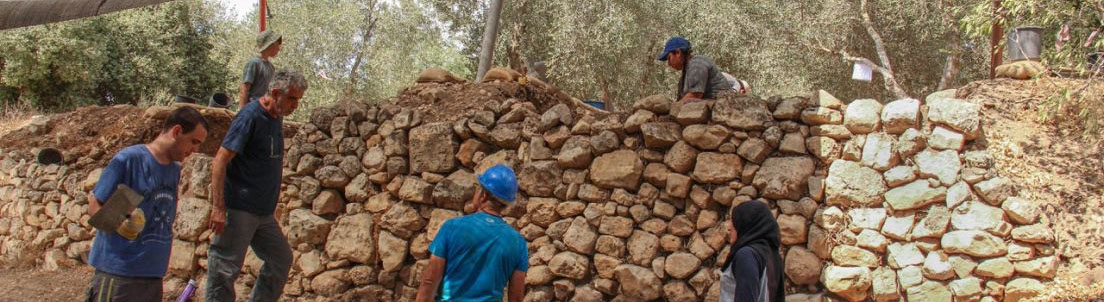
 My project involved using Geographic Information System (GIS) analysis with ethno-archaeological materials in researching the nomads in the Negev region in Israel with the aim of explaining the patterns of ancient pastoral and nomadic settlement in late antiquity. I chose two small areas in this region – Makhtesh Ramon and Har Karkom – as a case study.

With the introduction of the Negev Emergency Survey, a series of systematic field surveys of the entire Negev had been undertaken since 1978. Continue reading

With ASOR’s Help No Need to Stowaway

By: Sara Rich, 2012 Platt Fellow, Mazotos Shipwreck Excavation, Cyprus

Last summer, I received a Platt Foundation Fellowship to return for the third season of the Mazotos Shipwreck Excavation in Cyprus. The 18-m long cargo vessel went down a few decades before the Kyrenia, during the Late Classical Period (mid-fourth c. BC). Previous years had exposed three lead anchor stocks and sections of preserved hull and keel wood at the bow. Last year, we were to start excavating the stern, and since ship timbers are an important part of my research, I was anxious to get back. However, at that point, I was in the third year of my PhD at the Katholieke Universiteit Leuven (Belgium) and “in between” funding opportunities. I am so grateful to have received one of the fellowships because, besides being a stowaway, there is no way that I would have been able to return to the project without it. Continue reading

Evidence of the Arabian Incense Trade in the Southern Levant: Altars and Alabaster Perfume Jars from the Axial Age (8th-4th Centuries B.C.E.)

Zimmerle_BillBy: William Zimmerle, University of Pennsylvania, Educational and Cultural Affairs Fellow

Hundreds of portable altars made of stone and clay have been uncovered from archaeological contexts dated to the beginning of the first millennium B.C.E. until the early Roman Near East. Drawing upon anthropological models of trade, cult and economy, this project examines the replication of one specific type of altar, the portable domestic cuboid-burner, the chronological horizon of which extends from the late Iron Age II into the Hellenistic-Roman phases of the southern Levant. Continue reading

ASOR Heritage Fellowship: The Beginning of a Grand Adventure

By: Nate Ramsayer, M.A. student in Hebrew Bible and Ancient Near East at Brandeis University, 2012 Heritage Fellow

Nate at the Giza Pyramids before the dig in Israel, living the dream.

My participation in fieldwork was entirely predicated upon receiving a Heritage Fellowship; it allowed me to buy a plane ticket to the Middle East. Had I not been granted an award, you’d find a much grumpier, much more naïve Hebrew Bible student still sitting at Logan Airport in Boston, probably with a cup asking for change, trying to figure how in the heck he’s gonna make it overseas in time for next summer’s season!

The financial help ASOR provides students is incalculable in its impact. Continue reading

Changing perceptions through fieldwork

Excavating a Middle Islamic barrel-vaulted room

By: Nicholas Ames, 2012 Platt Fellow

The first thing that struck me once the post-excavation haze wore off a few weeks after my return to the United States, was the sudden realization of the vast difference between “education” and “edification.” The classroom’s education provides the theoretical framework with which to situate my perception of the world, but through the context of labor, the act of archaeology provides an ephemeral emic understanding of the past, becoming a contextualized reification of the course-based educational experience. And with memories of the field still fresh in my mind, I found I was no longer content to confine my learning to a lecture hall listening to someone pontificate about the past. What I wanted was to go out and uncover it. Continue reading

Archaeology Weekly Roundup! 3-8-13

It’s snowy again in Boston, but here’s some news from a lot of places less icy.

Recent archaeological discoveries on the Arabian Peninsula have uncovered evidence of a previously unknown culture based in the now arid areas in the middle of the desert. The artefacts unearthed are providing proof of a society that flourished thousands of years ago and could push back the domestication dates for horses by thousands of years.

A remarkable find from 2011 of a 33,000 year old dog from a cave in the Siberian Altai mountains showed evidence of dog domestication, the earliest ever found. Now DNA sequencing has proven the remains to be more closely linked to modern dogs than wolves, and one of the growing number of early dogs.

Over the past seven years, around 1,500 antiques—including coins, and pre-Islamic stone carvings—have been confiscated at Sana’a International Airport. Smugglers have been tucking these ancient artifacts inside clothing and hiding them in bags, hoping to sell them abroad, but now they’re being turned over to the National Museum. Continue reading

Geographical Factors in the Defense of Judah and Israel

Keimer_KyleBy: Kyle Keimer, University of California, Los Angeles, Educational and Cultural Affairs Fellow

My research focused on describing the varying strategies for defense of Israel and Judah in light of each kingdom’s topographical realities and the changing political situation over the course of the Iron II. I began with two basic questions: 1) how, in military terms, did fortifications work? and 2) where were they placed and in response to which circumstances? My goal was to reach an understanding of the function of fortified sites both on a regional and inter-regional level. Assessing defensive networks and answering the preceding questions, however, required broader considerations, such as where people want to go and where they can not go. Also, what kind of enemy is being defended against? When all of these questions were considered in conjunction with the topography and the type and distribution of fortified sites, it was possible to address their defensive function and strategy. Continue reading

The Platt Fellowship’s Impact

By: Andrew LoPinto, 2012 Platt Fellow

Being selected to receive the ASOR Platt Excavation Fellowship has profoundly impacted me and my career in numerous ways.  On a practical level, the support of the Platt Excavation Fellowship made it possible for me to join the staff of the Pennsylvania State University expedition to Mendes for the 2012 season by covering the cost of my airfare to Egypt.  For many students who have chosen to work in Egypt, the cost of airfare can limit or entirely exclude individuals from participation in field work.  When combined, airfare, room and board, ground transit, baggage fees, and other miscellaneous expenses to undertake field work in Egypt can cost thousands of dollars.  Mitigating even one of those factors can take a potential field season from being cost-prohibitive, to being possible.  Continue reading

The Emergence of Social Complexity: Changes in Animal Management Strategies between the Chalcolithic and Early Bronze Age in the Near East

Hill_AustinBy: Austin C. Hill, University of Connecticut, Educational and Cultural Affairs Fellow

The Chalcolithic to Early Bronze Age transition in the southern Levant has long been considered a threshold event in the development of social complexity in the Near East.  Societies are argued to have shifted from small scale, village-based chiefdoms to true “urban” or city-state level societies. Nevertheless, much recent criticism has focused on the accuracy of this long held characterization and the degree of social change that occurred between these periods. Studies of animal economies, however, can offer direct insight into political and social systems, but have rarely been used to look at social change in this key period. The types of species raised, how and when animals are slaughtered, and the parts of animals that are consumed are all directly affected by the degree of hierarchically organized production and distribution. Rigorous faunal studies, therefore, are a vital line of evidence in studying the emergence of social complexity. My research at the Albright focused on extending our understanding of faunal economies in these critical periods by analyzing new material, and synthesizing published material. Continue reading

The Platt Fellowship Changed My Life

By: Caroline Carter, 2012 Platt Fellow

In the summer of 2011, I attended my first archaeological excavation during the opening season of the Huqoq Excavation Project in Huqoq, Israel under the direction of Professor Jodi Magness of the University of North Carolina at Chapel Hill and the Israel Antiquities Authority. I had not planned on returning in 2012, due to finances, nevertheless I reapplied for the project as well as a few fellowships just to see what would happen.

A month later, I received the email from ASOR notifying me that I was a recipient of the 2012 Platt Fellowship to attend my second season at Huqoq. It is a moment that I will never forget- Continue reading

Archaeology Weekly Roundup! 3-1-13

A brief article on some really interesting uses of ‘cyber-archaeology’ at Petra, including terrestrial LiDAR and balloon photography.

More than 2,000 years ago, at a time when Egypt was ruled by a dynasty of kings of Greek descent, someone, perhaps a group of people, hid away some of the most valuable possessions they had — their shoes.

The Sustainable Preservation Initiative’s project at the Moche site San José de Moro in Peru hopes to be a model for others looking to create sustainable community development and heritage preservation. Continue reading

From Code to Discourse: The Semantics of Ancient Near Eastern Ritual

Feder_YitzhaqBy: Yitzhaq Feder, University of Haifa, Educational and Cultural Affairs Fellow

My fellowship at the Albright Institute provided me with the opportunity to make significant progress in my large-scale inquiry into the origins of ritual symbols and their sociological and political functions in cultural discourse. This project builds upon the recognition of the foundational role of concrete imagery in processes of human conceptualization and expression (as elucidated in ‘embodiment’ theory), particularly as reflected in the languages and rituals of the ancient Near East. In implementing this project, I distinguish between codes (the repertoire of symbols) and discourse (the systems of thought regulating the use of these codes). The case studies which I examined during my residency at Albright aimed to shed light on different aspects of the relationship between ritual codes and cultural discourse. Continue reading

Metal Implements and Tool Marks from the Levantine Second Millennium BC

Blackwell-NicholasBy: Nicholas Blackwell, Bryn Mawr College, American School of Classical Studies at Athens, AIAR Educational and Cultural Affairs Fellow

The primary purpose of my Spring 2012 fellowship at the Albright Institute was to compile an extensive dataset of metal tools from the Levantine second millennium BC. This research began to round out the previously-incomplete Levantine category of a tool database assembled for my dissertation on Middle and Late Bronze Age metal tools from the Aegean, Eastern Mediterranean, and Anatolia (Bryn Mawr College, 2011). Furthering this study through reading excavation reports from Syro-Palestinian sites and visiting museums in Israel, I was able to add a considerable number of tools to my database. The updated data has proven useful by 1) revealing patterns of tool distributions and regional preferences within the Levant, and 2) providing some context and comparison for implement types and trends in the broader Mediterranean and Anatolian worlds. The result is a more informed investigation of cross-regional interaction as indicated by tool choices and depositional practices. Continue reading

Archaeology Weekly Roundup! 2-22-13

news_bentpyramidFrom a distance, it looks as though an animal has burrowed around the 4,000-year-old Black Pyramid of Amenemhat III. But thieves dug these holes. And Egyptian archaeologist Monica Hanna calls that “a catastrophe.

Chemi Shiff’s analysis of the significance of the Nabataean site of Avdat in Israel and how different approaches to the site over time have alienated local Bedouin groups.

The ruins of a Buddhist temple dating back 1,500 years ago have been discovered in China’s largest desert–the Taklimakan in Xinjiang Uygur autonomous region. The temple features murals executed in a Greco-Buddhist art style, which was seldom seen after the 6th century. Continue reading

The Tel Burna Archaeological Project

Uziel_JoeBy: Joe Uziel, Israel Antiquities Authority, Ernest S. Frerichs Fellow

 In 2009, Dr. Itzhaq Shai and I initiated a long-term archaeological project at Tel Burna.  The site is located in the Judean Shephelah on the northern banks of Wadi Guvrin.  While described by a number of scholars over the years as a prominent ancient site, it is one of the last tells in the Shephelah to be excavated.  Since 2009, an ongoing survey, including several different methods has been conducted alongside excavations.  Thus far, 21 squares have been excavated in three different areas, uncovering a sequence of five strata spanning the Late Bronze Age IIB through to the Persian period. Continue reading

To Unify and Distinguish: The Making of “Crusader” Art

Mahoney_LisaBy: Lisa Mahoney, DePaul University, National Endowment of the Humanities Fellow

The crusades to the Holy Land defined all of western Christendom during the 12th and  13th centuries, even if this was not continuous and did not affect all of Christendom at the same time. In the Holy Land, however, once cities had been conquered and loca sancta “freed,” the military component of this enterprise was superseded by other matters—the creation and maintenance of a new, identifiable community despite the cultural dissimilarity of its members and the remove of their origins.  Although an endeavor never articulated in available journals, guides, or historical accounts, that is, in tidy passages that can be excerpted and pointed to, I contend that it was the central factor determining artistic production in the Latin occupied territories.  Continue reading

Archaeology Weekly Roundup! 2-15-13

The Israel Museum on Tuesday opened its most ambitious archaeological exhibition and the world’s first devoted to Herod, the lionized and demonized Rome-appointed king of Judea, who reigned from 37 to 4 B.C.E. and is among the most seminal and contentious figures in Jewish history. But the exhibition, has also brought its own bit of controversy.

According to reports coming out of Peru, archaeologists have unearthed a previously undiscovered, 5,000 year old temple at the famous El Paraiso pyramid site, located not far from Lima, the capital city.

Researchers have created software that can rebuild protolanguages – the ancient tongues from which our modern languages evolved. To test the system, the team took 637 languages currently spoken in Asia and the Pacific and recreated the early language from which they descended.
Continue reading

The Philistine Remains at Tell es-Safi/Gath: Their Regional and Transcultural Connections with the Aegean and Cyprus

Hitchcock_LBy: Louise Hitchcock, University of Melbourne, National Endowment for the Humanities Fellow

My sabbatical semester at the Albright resulted in a preliminary analysis of the stratigraphy, finds, and architecture from Area A2, in the early Philistine sector of Tell es-Safi/Gath, in collaboration with Prof. Aren Maeir and specialist members of the excavation team. The Tell es-Safi/Gath Archaeological Project is a long-term collaborative project begun in 1996 under the direction of Prof. Maeir of Bar-Ilan University, Israel as a consortium involving foreign research partners.  It is aimed at studying the archaeology of one of the largest and most important multi-period sites in Israel, which was the location of Gath, one of the five capitals of the Philistine Pentapolis. For the last four years, I have been directing excavations in the early Philistine part of the site, Area A2, where I lead the largest Australian project in Israel with support from the Australian Research Council. This collaboration emerged as a direct result of time spent at the Albright as Annual Professor in 2007. Working at the Albright provided me with easy access to the library and my collaborators. Continue reading

The Chalcolithic to Early Bronze Age (EB) Transition – Investigation of a Weak Link

By: Eliot Braun, National Endowment for the Humanities Fellow

 My tenure as an NEH Fellow at the Albright was exceptionally productive as it freed me to direct virtually all my energies into research and writing related to the above project.

I was able to complete an article in which I challenge some scholars’ interpretations suggesting there was no Late Chalcolithic occupation at Ashqelon. In it, I demonstrate that Chalcolithic and EB I settlements occupied hilly ridges and troughs between them. Since the area was bulldozed flat prior to excavation, only low-lying occupation debris was left to be excavated.  Thus, remains of both the Chalcolithic and EB I periods were often encountered at virtually the same absolute elevations, leading to published accounts suggesting all sequential deposits were actually contemporary, when in fact Stratum 1 at one location might be Chalcolithic, while nearby Stratum 1 might be dated to the Early Bronze Age.  Continue reading

Archaeology Weekly Roundup! 2-8-13

A skeleton found beneath a Leicester car park has been confirmed as that of English king Richard III. Experts from the University of Leicester said DNA from the bones matched that of descendants of the monarch’s family.

At least 35 small pyramids, along with graves, have been discovered clustered closely together at a site called Sedeinga in Sudan. Continue reading