

Archaeology Weekly Roundup! 5-17-13

Will Egypt’s illustrious heritage fall into oblivion under the toll of urban and agricultural encroachment? Nevine El-Aref finds that serious problems are facing some of the nation’s famous archaeological sites, while others may be storms in so many teacups.

By the end of the century, the birthplace of America may be underwater.  Jamestown is now threatened by rising sea levels that scientists say could submerge the island and scientists are wondering if there’s a way to save it.

Analysis of DNA from ancient remains on the Greek island of Crete suggests the Minoans were indigenous Europeans, shedding new light on a debate over the provenance of this ancient culture. Continue reading

Archaeology Weekly Roundup! 5-3-13

news_sanaaTo see Sana’a’s Old City for the first time is like “a vision of a childhood dream world of fantasy castles,” a visitor once remarked, but official neglect and unruly construction are threatening to destroy that magic. UNESCO has even threatened to remove the city from the World Heritage List.

They lived in well-planned cities, made exquisite jewelry, and enjoyed the ancient world’s best plumbing. But the people of the sophisticated Indus civilizationremain mysterious, though recent research may have uncovered evidence of matrilocality and surprising levels of violence.

During routine archaeological research as part of the Ancient Egypt Leatherwork Project (AELP) carried out by Salima Ikram, Professor of Egyptology at the American University in Cairo (AUC) and Andre Veldmeijer, head of the Egyptology section at the Netherlands Flemish Institute in Cairo, a collection of 300 leather fragments of an Old Kingdom chariot were uncovered at the Egyptian Museum in Cairo. Continue reading

Archaeology Weekly Roundup! 4-26-13

news_aleppominaretThe minaret of one of Syria’s most famous mosques has been destroyed during clashes in the northern city of Aleppo. The state news agency Sana accused rebels of blowing up the 11th-Century minaret of the Umayyad Mosque. However, activists say the minaret was hit by Syrian army tank fire.

The builders of the famous Giza pyramids in Egypt feasted on food from a massive catering-type operation, the remains of which scientists have discovered at a workers’ town near the pyramids.

Sounding like the plot from a science fiction novel, a robot has discovered three burial chambers under one of the main temples at the archaeological site of Teotihuacan. The ancient city is about 31 miles northeast of Mexico City and estimated to be over 2,000 years old. Continue reading

Archaeology Weekly Roundup! 4-12-13

A new language dating back to the Scottish Iron Age has been identified on carved stones. These inscriptions are believed to belong to the early Pict society living from ca 300 to 843 AD, in modern-day eastern and northern Scotland.

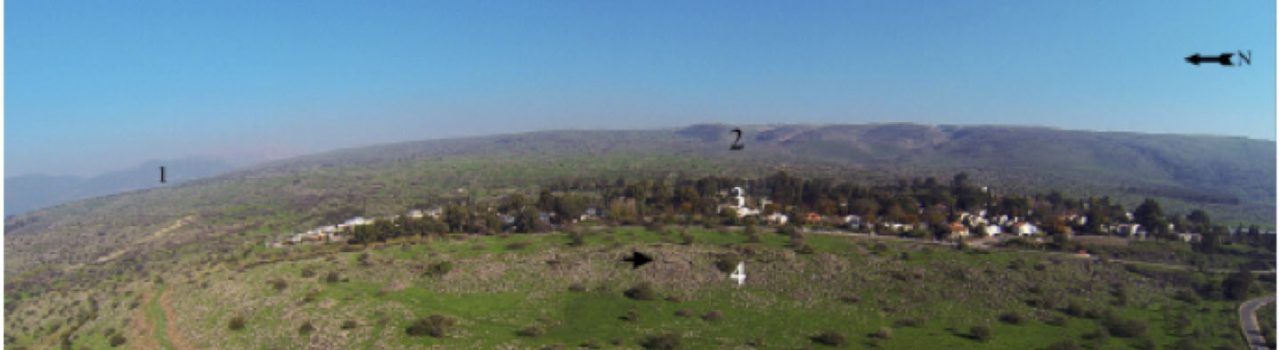
A giant “monumental” stone structure discovered beneath the waters of the Sea of Galilee in Israel has archaeologists puzzled as to its purpose and even how long ago it was built.

The rise of crowdfunding has taken another step forward as UK-based DigVentures launches the world’s first archaeology crowdfunding platform in response to the dwindling of traditional sources of funding for archaeology. Continue reading

Archaeology and Cultural Heritage in Egypt after Mubarak

ANET1_WILLIAMSFig1By: Greg Williams

Egypt’s January 25th revolution was originally seen as part of the larger “Arab Spring” across the Middle East where old political regimes were overthrown by popular protests and replaced by representative democracies. But on January 28th 2011, as chaos reigned in Cairo’s Tahrir Square, reports began circulating around the globe claiming that antiquities on display in the Egyptian Museum had been stolen. Zahi Hawass, the famous face of Egyptian archaeology, Mubarak regime insider, and then head of the Supreme Council of Antiquities (SCA), was immediately embroiled in the situation. Many outside of Egypt believed that the political volatility and economic crisis engulfing the capital and the rest of the country had claimed some of the most precious artifacts of Egypt’s over 5,000 year history which would be lost forever. Egyptians of all social classes converged on the museum to protect it, sparking hopes that a new era in the relationship between Egyptians and their past had begun.  Continue reading

Archaeology Weekly Roundup! 3-29-13

news-climbing-pyramidAn Internet sensation was touched off this week by Russian photographer Vadim Makhorov and a group of his friends — the group ignored regulations prohibiting the public from climbing on the Pyramids at Giza, Egypt, and came away with spectacular photos.

Bones which some believe could be those of Alfred the Great have been exhumed from an unmarked grave in Winchester to protect them from the enthusiasm of seekers for lost kings inflamed by reports of the rediscovery of the remains of Richard III in Leicester.

Archaeologists in Germany have done experiments on freshwater fish and found that they return C-14 dates hundreds to thousands of years older than the fish, leading to many possible problems in archaeological dating. Continue reading

Archaeology Weekly Roundup! 3-22-13

news_EgyptianwallEgyptian blue, the world’s oldest artificial pigment, could be put to a range of modern uses from medical imaging devices to remote controls for televisions, newly-published research says.

Research by Hendrik Bruins suggests people in the Negev highlands practiced agriculture as long ago as 5000 B.C.E. This is thousands of years earlier than researchers previously thought.

Stone tools unearthed at a Brazilian rock-shelter may date to as early as 22,000 years ago. Their discovery has contributed to the debate about whether ancient people reached the Americas long before the famed Clovis hunters 13,000 years ago. Continue reading

Archaeology in the News! 3-15-13

News_LeptisSome great photographs of Roman ruins in Libya from the air by Jason Hawkes.

A new neolithic village has been found in Israel as part of salvage excavations. It contains some of the earliest evidence of growing legumes and cultic sexual symbols.

Thanks to delays in construction of the massive mine and a hefty influx of cash from the World Bank, the 1.5-square-mile Mes Aynak complex is an archaeological triumph – though bittersweet. Archaeologists now have more time to excavate before destruction begins for the copper mine. Continue reading

Archaeology Weekly Roundup! 3-8-13

It’s snowy again in Boston, but here’s some news from a lot of places less icy.

Recent archaeological discoveries on the Arabian Peninsula have uncovered evidence of a previously unknown culture based in the now arid areas in the middle of the desert. The artefacts unearthed are providing proof of a society that flourished thousands of years ago and could push back the domestication dates for horses by thousands of years.

A remarkable find from 2011 of a 33,000 year old dog from a cave in the Siberian Altai mountains showed evidence of dog domestication, the earliest ever found. Now DNA sequencing has proven the remains to be more closely linked to modern dogs than wolves, and one of the growing number of early dogs.

Over the past seven years, around 1,500 antiques—including coins, and pre-Islamic stone carvings—have been confiscated at Sana’a International Airport. Smugglers have been tucking these ancient artifacts inside clothing and hiding them in bags, hoping to sell them abroad, but now they’re being turned over to the National Museum. Continue reading

Archaeology Weekly Roundup! 3-1-13

A brief article on some really interesting uses of ‘cyber-archaeology’ at Petra, including terrestrial LiDAR and balloon photography.

More than 2,000 years ago, at a time when Egypt was ruled by a dynasty of kings of Greek descent, someone, perhaps a group of people, hid away some of the most valuable possessions they had — their shoes.

The Sustainable Preservation Initiative’s project at the Moche site San José de Moro in Peru hopes to be a model for others looking to create sustainable community development and heritage preservation. Continue reading

Archaeology Weekly Roundup! 2-22-13

news_bentpyramidFrom a distance, it looks as though an animal has burrowed around the 4,000-year-old Black Pyramid of Amenemhat III. But thieves dug these holes. And Egyptian archaeologist Monica Hanna calls that “a catastrophe.

Chemi Shiff’s analysis of the significance of the Nabataean site of Avdat in Israel and how different approaches to the site over time have alienated local Bedouin groups.

The ruins of a Buddhist temple dating back 1,500 years ago have been discovered in China’s largest desert–the Taklimakan in Xinjiang Uygur autonomous region. The temple features murals executed in a Greco-Buddhist art style, which was seldom seen after the 6th century. Continue reading

Archaeology Weekly Roundup! 2-15-13

The Israel Museum on Tuesday opened its most ambitious archaeological exhibition and the world’s first devoted to Herod, the lionized and demonized Rome-appointed king of Judea, who reigned from 37 to 4 B.C.E. and is among the most seminal and contentious figures in Jewish history. But the exhibition, has also brought its own bit of controversy.

According to reports coming out of Peru, archaeologists have unearthed a previously undiscovered, 5,000 year old temple at the famous El Paraiso pyramid site, located not far from Lima, the capital city.

Researchers have created software that can rebuild protolanguages – the ancient tongues from which our modern languages evolved. To test the system, the team took 637 languages currently spoken in Asia and the Pacific and recreated the early language from which they descended.
Continue reading

Archaeology Weekly Roundup! 2-8-13

A skeleton found beneath a Leicester car park has been confirmed as that of English king Richard III. Experts from the University of Leicester said DNA from the bones matched that of descendants of the monarch’s family.

At least 35 small pyramids, along with graves, have been discovered clustered closely together at a site called Sedeinga in Sudan. Continue reading

Archaeology Weekly Roundup! 2-1-13

Six different Israeli ministries invested nearly $2 million to repair damage, much of it irreversible, after unknown vandals in October 2009 assaulted the site of Avdat, designated by UNESCO (United Nations Science and Culture Organization) as a world’s cultural heritage.

The preservationists of Timbuktu’s centuries-old artifacts have been holding their breath for weeks, waiting for the moment when the French military would seize back Mali’s ancient northern capital from the Islamic militants who have occupied it for 10 months. Now that that’s happened it still isn’t clear how many of the city’s historic manuscripts have survived, but most of them may be safely hidden away.

A recent study of pottery remains from Indus valley sites shows that the origins of curry are a lot older than most people think in this article about the development of curry. Continue reading

Archaeology Weekly Roundup! 1-25-13

New findings from the 2,600-year-old grave of a Celtic woman in Germany suggest the ancient Celts were much more sophisticated than previously thought. The entire tomb was removed from the ground for further excavation in a laboratory and is continuing to reveal new surprises.

A team of researchers led by the UAB has found the first ancient remains of a calcified ovarian teratoma, in the pelvis of the skeleton of a woman from the Roman era. The find confirms the presence in antiquity of this type of tumour – formed by the remains of tissues or organs, which are difficult to locate during the examination of ancient remains. Inside the small round mass, four teeth and a small piece of bone were found. Continue reading

Archaeology Weekly Roundup! 1-18-13

The archaeological archive of Israel, which is administered by the Israel Antiquities Authority and amasses data on all of the activity of the archaeological entities in the country, is being digitized and will go online in the coming days. This is being underwritten with joint funding provided by the Landmarks heritage program in the Prime Minister’s Office and the Israel Antiquities Authority.

The Tomb of the Shroud is a first-century C.E. tomb discovered in Akeldama, Jerusalem, Israel that had been illegally entered and looted. Now testing has been done: genetic analysis of the bioarchaeological remains from the tomb using mitochondrial DNA to examine familial relationships of the individuals within the tomb and molecular screening for the presence of disease. Continue reading

Archaeology Weekly Roundup! 1-11-13

Years of conflict have exacted a heavy toll on centuries of history in the Gaza Strip. While traces of its rich past remain, the race to preserve what is left beneath the surface of this battle-scarred land is fraught with problems.

A mysterious “snake goddess” painted on terracotta and discovered in Athens may actually be Demeter, the Greek goddess of the harvest, and come from a 7th century BCE shrine.

More on the ongoing destruction of Syria’s cultural heritage sites.

Continue reading

Archaeology Weekly Roundup! 1-5-13

Archaeologists who have completed the excavation of a 900-seat arts center under one of Rome’s busiest roundabouts are calling it the most important Roman discovery in 80 years.

A temple and sacred vessels from Biblical times have been discovered at Tel Motza. The finds, dated to the early monarchic period and including pottery figurines of men and horses, provide rare testimony of a ritual cult in the Jerusalem region at the beginning of the period of the monarchy.

Some marine archaeologists think ancient artifacts resembling the Antikythera mechanism, an ancient bronze clockwork astronomical calculator, may rest amid the larger-than-expected Roman shipwreck that yielded the device in 1901. Continue reading

Archaeology Weekly Roundup! 12-21-12

Fragment of an Abbasid Quran, showing geometric ornamentation. Probably written in the ninth century. (Cambridge University Library)

The Cambridge Digital Library has just made available thousands of pages from fragile religious manuscripts for Internet users’ perusal, including a 2,000-year-old copy of the Ten Commandments, known as the “Nash Papyrus.”

New CT scans of Ramessess III show that his throat was slit, solving an ancient mystery. Additional test also indicate an unidentified mummy may be his disgraced son.

Thousands of fragments of the Dead Sea Scrolls went online Tuesday with the launch of a new website by Google and the Israel Antiquities Authority, part of a move to make the famed manuscripts easily available to scholars and casual web surfers. Continue reading

Archaeology Weekly Roundup! 12-14-12

(AP Photo/Peter Dejong)

(AP Photo/Peter Dejong)

Johan Huibers has finished his 20-year quest to build a full-scale, functioning model of Noah’s Ark. Huibers, used books 6-9 of Genesis as his inspiration, following the instructions God gives Noah down to the last cubit.

British archaeologists Dr Nicholas Saunders of the University of Bristol and Prof Clive Ruggles of the University of Leicester combined the experience and knowledge gained by studying the Nasca lines into the most detailed study to date and uncovered a unique labyrinth in the Peruvian desert.

French archaeologists have some trouble reconstructing an ancient instrument, a carnyx to be exact–a long, trumpet-like instrument with an animal’s head at the top end, used by the Celts in the last three centuries BC. Continue reading