Terracotta Oil Lamps from Qumran and Ein Feshkha (R. de Vaux’s Excavations, 1951-1958): Typology, Chronology and the Question of Manufacturing Centers

Jolanta MylnarczykBy: Jolanta Mlynarczyk, University of Warsaw, Andrew W. Mellon Fellow

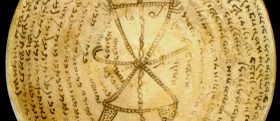
The aim of my research at the Albright was to study an assemblage of ca. 200 oil lamps discovered at Qumran by archaeologists from the Ecole Biblique at the settlement itself and in the caves (1951-1956) as well as at Ein Feshkha (1958). The importance of this cluster of sites for our understanding of the late Second Temple period is indisputable, yet in the past many lamps have not been properly described within their archaeological context. Hence, the first stage of my research was focused on completing a description of the lamps and extracting the relevant contextual information. The second stage involved working out the typology. Conceived as a part of the general typology of the Qumran ceramics, the lamp typology consists of two series, each one dependent on a different technique employed in lamp-making: wheel-throwing and moulding. In the former group, the types have been distinguished on the basis of shape; and in the latter, the criterion of shape is combined with that of decoration. Continue reading

Texts without Qumran and Qumran without Texts: Searching for the Latrines

By: James D. Tabor, The University of North Carolina at Charlotte

 On the other days they dig a small pit, a foot deep, with a paddle of the sort given them when they are first admitted among them; and covering themselves round with their garment, that they may not affront the rays of God, they ease themselves into that pit.                                                                                  Josephus War 2.148

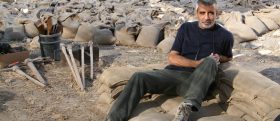
  This paper explores the complex and shifting dynamics of comparing texts with texts, texts with “sites,” and sites with themselves, but without texts. I use the term “sites” loosely to refer to the material or archaeological evidence that may or may not be related to a given text from antiquity. I see this as an extension of Jonathan Z. Smith’s interest and fascination with  “comparisons” so evident in much of his work over the past three decades.  But more particularly I have in mind the Louis H. Jordan Lectures in Comparative Religion, delivered at the University of London in 1988, subsequently published as Divine Drudgery[1]. Fascinated by the “thick dossier of the history of the enterprise,” i.e., the comparison of “Christianities” and the religions of Late Antiquity, Smith undertakes what he calls “archaeological work in the learned literature” in order to highlight both theoretical and methodological issues. His operative question is what is “at stake” in the various comparative proposals? I am convinced that some of the same dynamics Smith finds operating in the development of the study of “Christian Origins,” namely Roman Catholic and Protestant apologetics and presuppositions, have been present from the beginning in considering the textual corpus known as the “Dead Sea Scrolls,” and in interpreting the physical site of the adjacent ruins of Qumran, as well as in the combining of the two—that is, texts and site. I want to expand a bit the comparisons of “words,” “stories,” and “settings” beyond their purely “textual” levels, and explore the methods of bringing in non-textual evidence, that is, evidence of “place.” In that sense I find Smith’s metaphor of the “archaeological” more than intriguing, and in this paper, with spade in hand (or perhaps I might say with “paddle” in hand!), I want to explore how the proverbial “mute stones” speak, or remain silent, in the presence of texts, and the ways in which the texts inform “place,” and “place” might enlighten the texts. Continue reading

From Destruction to Archaeology: the significance of “Operation Anchor” for the Cultural Heritage of Jaffa.

By: Martin Peilstöcker 

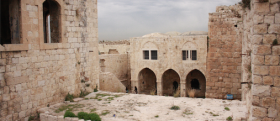
During spring 1936 the nationalistic uprising of the Palestinian Arab population against Mandatory British rule and Jewish mass immigration became more and more violent. A strike was declared on Jaffa port, in those days still one of most important harbors of Palestine. Groups of Palestinians left the narrow alleys of the Old City, the “Kasbah,” carried out attacks on the representatives of the Mandatory government or on Jews and found shelter afterwards in the labyrinth of the long-grown city on the mound of biblical Yafo. The reaction of the British was both, violent and effective. Under the cover of announced measures to improve the infrastructure, three broad paths, each between 10 and 30 meters wide were opened in the Old City creating what looked like anchor-shaped trenches from above, giving the name to this operation. The trenches were created using large amounts of explosives to detonate and demolish more than 200 buildings (Gavish 1983).

Old City of Jaffa before and after Operation Anchor 1936

Continue reading

Ossified Territory and Theaters of the Absurd: Personal Reflections on Taking Students beyond the River

By:  Elena D. Corbett, Penn State Erie, The Behrend College
The views expressed here are those of the author. Please see the full disclaimer at the end of this essay.

Mural on the Cardo, Jerusalem.

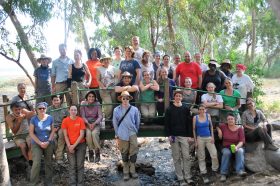
Quite by accident at what is still a fairly early point in my career, I have been at the helm of several study abroad opportunities for American students in Jordan.  Within recent days I returned to Amman from Jerusalem having accomplished a personal first:  as part of an institutional collaboration, a colleague and I had led a group of students forth and back across the river.  What follows is my attempt to grapple with a truly inarticulate mess of thought and feeling about the experience.

I don’t get to Jerusalem as often as I should.  The reasons are many, but revolve mainly around an overwhelming sense of absurdity that grows more cynical as years pass.  Continue reading

Update on ASOR’s strategic plan

Strategic plan adopted by ASOR board.

It is with great pleasure we announce that on April 24, 2010, the ASOR board of trustees unanimously adopted the “Strategic Plan as a blueprint to move ASOR forward.” A considerable amount of work has been done by the Strategic Planning Task Force that was chaired by ASOR President Tim Harrison. We thank President Harrison and the rest of the committee (Susan Ackerman, Jimmy Hardin, Morag Kersel, Sten LaBianca, P. E. MacAllister, and Carol Meyers) for their efforts and excellent work. To review ASOR’s Strategic Planning documents, please click here.

The Strategic Plan sets forth a blueprint for ASOR to move forward, but it intentionally did not resolve many implementation issues. The next step will be for President Tim Harrison to appoint an “Implementation Task Force” that will be charged with bringing specific recommendations for implementing the goals set forth in the Strategic Plan to the board of trustees. Updates on the progress of this committee will be posted online and in upcoming ASOR Newsletters.

Please contact Tim Harrison with any questions or comments on the Strategic Plan and with recommendations for the implementation stage. This is an exciting time for ASOR and we look forward to collaborating with our members in the years to come.

Posted by ASOR’s executive director: Andrew G. Vaughn

WAC Ramallah Conference

Posted by Morag Kersel on behalf of the World Archaeological Conference

True to its foundational principles, the World Archaeological Congress will hold its first “Middle East” meeting to focus on the powerful relationship between archaeology, heritage and politics. The archaeology of the West Bank and its surrounding region is enormously significant as the location where the three monotheistic faiths, Judaism, Christianity and Islam — all trace their origins. Yet the archaeological and cultural heritage of this region suffers constant and extensive damage from political and ideological struggles to control the region.

Today as Palestine moves closer to official statehood, WAC decries the often destructive politics that define Israeli-Palestinian relationships. WAC notes the on-going damage to the archaeological record but also the potential of a shared cultural heritage to build towards peace. WAC calls for participation in this strategic InterCongress to demonstrate how archaeology can serve political ends for the greater good.

The focus of this InterCongress is on structural violence: the insidious structures and the stark inequalities that perpetuate conflicts. Structural violence is built into western countries’ relations with much of the rest of the world, preventing most non-western countries from becoming economically and culturally ‘equal’ to the West. Often structural violence is hidden and works without overt physical infringement, making it all the more effective.

As anthropologists, archaeologists, cultural heritage professionals, and concerned local community members, WAC asks what role archaeological and cultural heritage research has in overcoming these ‘in-built’ obstacles? Must we engage against structural violence outside of archaeological practice, or can archaeological practice confront and impact the ravages of structural violence?

Sessions and panels will be held on August 9th and 10th. August 11th and 12th are reserved for workshops, “hands on” experiences and tours of the region by regional cultural heritage non-government organizations. Closing sessions and consideration of InterCongress resolutions will take place on August 13th.

Participants are encouraged to propose creative formats to facilitate critical consideration and discussion of the topics at hand. Proposals for sessions of various forms: read papers, panels, poster sessions, roundtable discussions, or other formats, should be sent to the Program Committee (wacramcom@gmail.com) by the deadlines indicated below. Sessions may be proposed by individuals or by groups. All sessions, regardless of format, will be provided a 2-hour block of time to meet. Session abstracts of 400 words should include the contact information for the organizer(s). Paper abstracts of 200 words may be sent to either the session organizers or to the Program Committee (wacramcom@gmail.com).

A Selection of Sessions:

- Marginalia and Structural Violence in Past Societies
- Looting, Landscape and Law
- Structures of Dominance in the Levantine Late Iron Age
- The Bones of Our Ancestors: The Treatment of Human Remains as a Mechanism for Tolerance or for Intolerance
- Beyond Causality: Tensions of Time and the Relationships between Instances of Violence and Institutionalized Violence
- The Future of Palestinian Cultural Heritage

Deadlines
Sessions & Panels – Friday, May 15th 2009
Papers – Friday, June 12th 2009

Early Bird registration deadline: May 30, 2009

For further information see:
http://www.worldarchaeologicalcongress.org/site/ramallah.php